Master Work in Process Inventory Accounting in 3 Steps
Mastering Work in Process Inventory Accounting: A Step-by-Step Guide Have you ever looked at your production floor and wondered exactly how much capital is sitting on those assembly lines? Understanding the value of partially completed goods is a cornerstone of solid manufacturing finance. Welcome to Work in Process accounting. Work in Process (WIP) inventory refers…
Mastering Work in Process Inventory Accounting: A Step-by-Step Guide
Have you ever looked at your production floor and wondered exactly how much capital is sitting on those assembly lines? Understanding the value of partially completed goods is a cornerstone of solid manufacturing finance. Welcome to Work in Process accounting.
Work in Process (WIP) inventory refers to the partially finished goods waiting for completion and eventual sale. These are items that have crossed the threshold from raw materials but have not quite reached the finish line as ready-to-sell products.
Work in process inventory accounting is the meticulous financial process of assigning costs—including raw materials, direct labor, and manufacturing overhead—to these unfinished goods. Doing this correctly ensures that your company’s balance sheet accurately reflects the value of its current production assets. This accuracy is ultimately crucial for profitability analysis, tax compliance, and maintaining overall financial health.
What You Need for Work in Process Inventory Accounting
Before you can master the math, you need the right tools in your financial toolkit. Proper WIP accounting requires a mix of solid documentation, modern software, and a standardized financial framework.
Essential Financial Records
To accurately track your WIP, you must gather all relevant receipts, invoices, and payroll logs. Relying on guesswork will quickly derail your financial reporting and skew your profit margins. You need precise, documented figures to build a reliable accounting foundation.
Gather the following essential records:
- Invoices for all raw material purchases.
- Detailed payroll logs for factory worker wages.
- Utility bills strictly related to factory operations.
- Depreciation schedules for your manufacturing equipment.
Inventory Management System
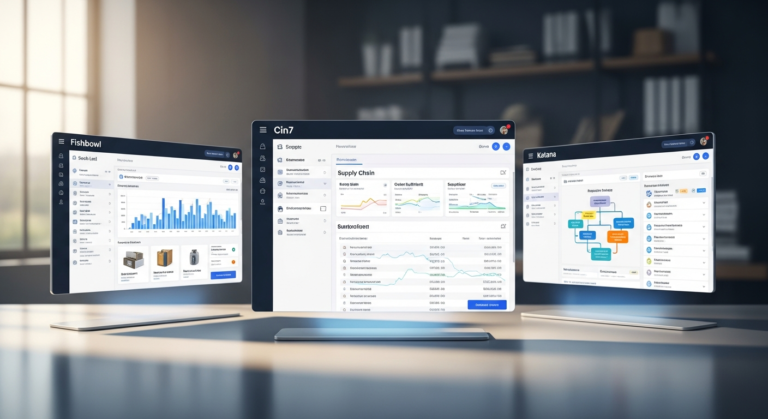
While very small operations might scrape by using simple spreadsheets, modern accounting usually requires a robust digital solution. You need a dedicated Enterprise Resource Planning (ERP) system or inventory management software. These platforms are capable of tracking real-time material transfers and labor hours with precision.
An ideal inventory management system provides:
- Automated syncing with your main general ledger.
- Barcode scanning to track raw materials moving to the factory floor.
- Real-time reporting on labor hours assigned to specific production batches.
A Standardized Costing Method
You must decide on and consistently apply a standardized costing methodology. A costing method is a specific accounting framework used to determine the total cost of producing a single unit of a product. Changing your method halfway through a fiscal year will create a nightmare for your accounting department.
Common costing methods include:
- Job Order Costing: Best suited for custom products or unique batches.
- Process Costing: Ideal for mass-produced, identical goods.
- Activity-Based Costing: Allocates overhead based on specific production activities.
Step 1: Aggregating Direct Costs
With your tools in place, the actual accounting process begins on the production floor. The first step involves aggregating the costs that are directly tied to the physical creation of your product.
Tracking Raw Materials
The first phase of the accounting process kicks off the moment materials leave your storeroom. You must journalize the transfer of these raw materials directly into the WIP inventory account. This transitions the value from your “Raw Materials” ledger over to your “WIP” ledger.
Direct materials are the primary physical components directly traceable to your final manufactured product. If you are building wooden chairs, the lumber and the metal bolts are your direct materials. Keep a close eye on scrap rates, as wasted materials still factor into your initial production costs.
Assigning Direct Labor
Next, you must calculate the cost of the labor directly involved in manufacturing the product. Direct labor represents the total wages and benefits paid to workers who physically build or assemble your products. This calculated cost must be added directly to the WIP ledger.
Keep in mind that direct labor encompasses much more than just a standard hourly wage. You must include:
- Base wages for assembly line workers or machine operators.
- Employer-paid payroll taxes.
- Health insurance and retirement benefits.
- Overtime pay incurred during the production run.
Step 2: Allocating Manufacturing Overhead
Direct costs are relatively easy to track, but overhead is where many manufacturing businesses stumble. You must account for the indirect costs of keeping your factory running.
Identifying Overhead Costs
Begin by gathering all indirect costs related to production that cannot be traced to a specific product. Manufacturing overhead includes all factory-related indirect expenses incurred during production, excluding direct materials and direct labor. These are the costs that support your production line but aren’t physically built into the product itself.
Common examples of manufacturing overhead include:
- Monthly factory rent or mortgage payments.
- Depreciation on heavy manufacturing equipment.
- Indirect labor wages (such as floor supervisors, maintenance staff, and janitors).
- Factory utilities like electricity, water, and heating.
Determining the Predetermined Overhead Rate
Because overhead bills often arrive at the end of the month, you must estimate these costs in advance. You do this by calculating an allocation rate for your current production runs. A predetermined overhead rate is an estimated allocation figure used to apply indirect costs to products before actual costs are known.
To find this rate, divide your estimated total manufacturing overhead by an estimated allocation base. Your allocation base should be a measurable, numerical driver of your production. Common bases include total direct labor hours or total machine hours used.
Applying Overhead to WIP
Once you have your rate, it is time to apply it to your current inventory. Multiply your predetermined overhead rate by the actual amount of the allocation base used during the accounting period.
For example, if your rate is $10 per machine hour and a batch took 50 hours, your applied overhead is $500. Add this final calculated figure directly to your WIP inventory account. This ensures your unfinished goods carry their fair share of the factory’s operational burden.
Step 3: Calculating Cost of Goods Manufactured (COGM) and Ending WIP
Now that all direct costs and overhead are allocated, you must determine the final value of your WIP. This vital step connects your day-to-day production tracking to your broader financial statements.
Formulating the Beginning WIP
First, identify the value of the WIP inventory carried over from the end of the previous accounting period. Beginning WIP is the total monetary value of partially completed goods existing at the start of a new accounting cycle. This figure serves as your starting baseline for the current period.
If you ended March with $15,000 worth of unfinished goods, your April Beginning WIP is exactly $15,000. You cannot properly calculate your current inventory value without knowing where you started.
Calculating the Total Manufacturing Costs
Next, you need to tally up all the fresh costs you introduced during the current period. You will simply add up the sums you calculated in Step 1 and Step 2.
The formula for this is straightforward:
- Take your Total Direct Materials.
- Add your Total Direct Labor.
- Add your Applied Manufacturing Overhead.
The sum of these three figures equals your total manufacturing costs incurred during the current period.
Determining Ending WIP Inventory
Finally, you will calculate the remaining value of the goods still sitting on the production floor. To do this, you first need to understand your COGM. Cost of Goods Manufactured (COGM) is the total cost of all products that were fully completed and moved to finished goods during the period.
Use the standard WIP formula to find your final balance sheet number:
Beginning WIP + Total Manufacturing Costs – Cost of Goods Manufactured (COGM) = Ending WIP Inventory.
This resulting figure provides the exact value of the unfinished goods left on your factory floor. You will carry this number forward as the Beginning WIP for your next accounting cycle.
Common Mistakes to Avoid
WIP accounting requires strict attention to detail from both management and floor workers. Even small mathematical errors can snowball into massive balance sheet discrepancies over time. Here are the most common accounting pitfalls to watch out for.
Miscalculating Overhead Rates
Applying overhead based on inaccurate estimations is a dangerous habit for any manufacturer. Relying on outdated historical data can drastically overvalue or undervalue your WIP inventory. This ultimately leads to skewed profit margins and incredibly poor pricing decisions.
To avoid this, management should:
- Review overhead rates at least quarterly.
- Adjust rates immediately if factory rent or utility costs spike.
- Ensure the allocation base accurately reflects the real-world production process.
Failing to Perform Regular Physical Counts
Many companies rely entirely on their ERP software to track inventory levels. However, avoiding periodic physical audits of the factory floor often leads to phantom inventory. Phantom inventory refers to goods that exist on your accounting ledgers but are missing, damaged, or stolen in reality.
Always schedule routine physical cycle counts to verify your software inputs. Ensure that the physical reality of the production floor perfectly matches your digital accounting records.
Blurring the Lines Between WIP and Finished Goods
A frequent error is prematurely moving WIP costs into the Finished Goods account. This usually happens before a product has completely passed your final quality control checks. Doing this misrepresents the timeline of asset readiness on your company’s balance sheet.
Wait until a product is genuinely ready for sale before transferring the costs out of WIP. Implementing a strict, verifiable workflow process helps prevent this common accounting blur.
The Final Result: Financial Statement Reporting
All of this meticulous tracking culminates in your company’s official financial reporting. WIP accounting directly impacts how your business’s health is viewed by external stakeholders, lenders, and investors.
Updating the Balance Sheet
Once your ending WIP is correctly calculated, it is officially recorded on your balance sheet. WIP is categorized strictly as a Current Asset alongside cash and raw materials.
This final result provides investors and management with an accurate snapshot of capital. It shows exactly how much cash is currently tied up in the production cycle. A heavily inflated WIP account might signal to analysts that your production line is severely bottlenecking.
Impact on the Income Statement
Proper WIP accounting also ensures that your eventual Cost of Goods Sold (COGS) is perfectly accurate. Cost of Goods Sold (COGS) refers to the direct costs attributable to the production of the goods that a company has actually sold.
Only when WIP becomes Finished Goods and is eventually purchased by a customer do those costs hit the income statement. This careful timing ensures incredibly accurate gross margin calculations. It actively prevents you from recording expenses for products that haven’t generated revenue yet.
Frequently Asked Questions
What is the difference between raw materials, WIP, and finished goods?
These represent the three main stages of the manufacturing inventory lifecycle. Raw materials are the unprocessed, base components waiting in storage to be used. Work in Process (WIP) refers to goods currently being manufactured but not yet completed.
Finally, Finished goods are fully completed, quality-checked products ready to be sold to customers. Think of it as the raw ingredients, the baking process, and the final cake ready for the bakery window.
Can work in process inventory accounting be automated?
Yes, and in modern manufacturing environments, it absolutely should be. Robust ERP systems use real-time data inputs like barcode scans and digital timesheets to automatically shift values between ledgers.
However, automation is only as good as the human data you feed it. You must still perform manual oversight, verify overhead rates, and conduct physical cycle counts to ensure absolute accuracy.
How often should I calculate my WIP inventory value?
Most professional manufacturing businesses calculate their WIP inventory value at the end of every month. This aligns seamlessly with standard monthly financial closing procedures and keeps balance sheets routinely up to date.
However, companies with incredibly fast production cycles may choose to calculate it weekly. The key is to maintain a consistent schedule that provides actionable insights without overwhelming your accounting team.
What happens if I understate my WIP inventory?
Understating your WIP inventory makes your company look significantly less valuable on paper. Because WIP is a current asset, artificially lowering it decreases your total reported assets on the balance sheet.
Furthermore, this error often mistakenly pushes costs into your COGS prematurely. This falsely reduces your reported net income, which can trigger issues with stakeholders and complicate your corporate tax filings. Accurate WIP reporting is essential to avoiding these cascading financial missteps.