Digital Twin in Manufacturing: 5-Step Guide to ROI
The Definitive Guide to Implementing a Digital Twin in Manufacturing: A Financial and Operational Control Perspective A Digital Twin in Manufacturing represents a structural shift in how operational telemetry interfaces with the ERP and General Ledger. For the Controller or CFO, it is not merely a 3D visualization tool; it is a mechanism for real-time…
The Definitive Guide to Implementing a Digital Twin in Manufacturing: A Financial and Operational Control Perspective
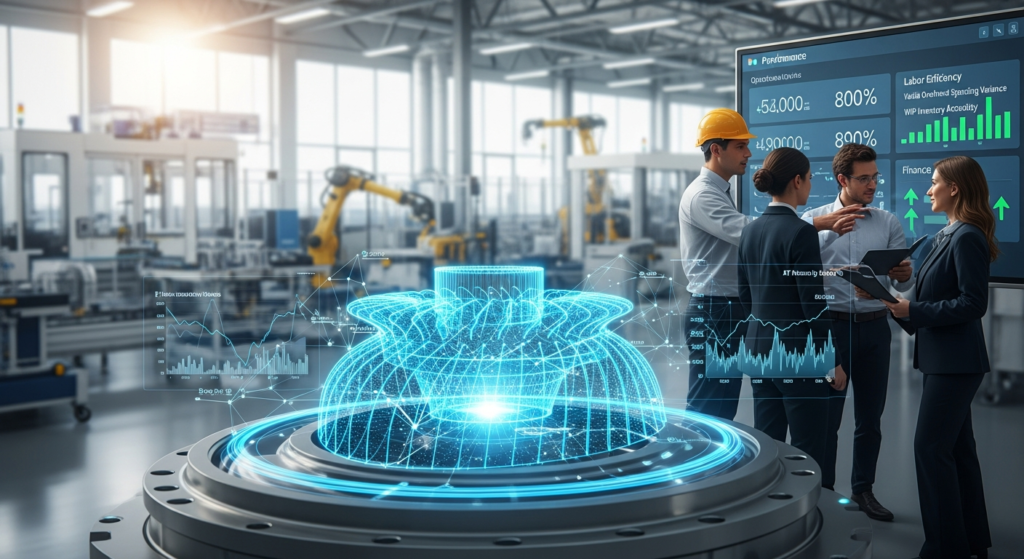
A Digital Twin in Manufacturing represents a structural shift in how operational telemetry interfaces with the ERP and General Ledger. For the Controller or CFO, it is not merely a 3D visualization tool; it is a mechanism for real-time variance analysis, hyper-accurate BOM rollups, and precise overhead absorption. By synchronizing physical asset states with a virtual model, finance and operations can proactively manage standard costing, reduce WIP inventory bloat, and accelerate the month-end close process.
This guide details the financial architecture and project controls required to deploy a digital twin, moving from capital expenditure (Capex) planning to steady-state operational expense (Opex) optimization.
Financial and Infrastructure Prerequisites
Before initiating a digital twin project, the finance team must establish the accounting treatments, budget controls, and IT/OT integration requirements.
IoT Sensors and Edge Devices (Capex)
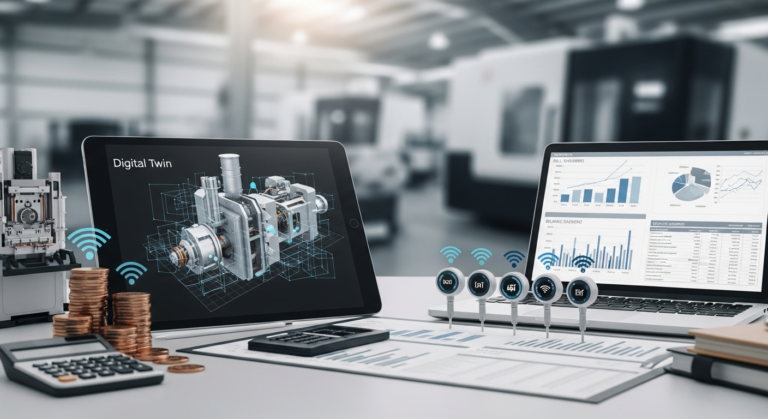
Physical assets require retrofitting with industrial sensors (temperature, vibration, cycle time). From an accounting standpoint, these hardware additions must be evaluated under fixed asset capitalization policies. If the sensors extend the useful life or increase the efficiency of a machine, you should be capitalize and depreciate them over the remaining life of the host asset.
Data Infrastructure and Cloud Connectivity (Opex vs. Capex)
Determine the accounting treatment of the data architecture. Cloud environments (AWS, Azure) are typically treated as SaaS Opex. However, internal development costs for the data pipeline and Edge computing gateways may qualify for capitalization under ASC 350-40 (Internal-Use Software) or IAS 38.
Specialized Simulation Software and ERP Integration
Enterprise-grade twin platforms (e.g., Siemens NX, PTC ThingWorx) must directly interface with your ERP system. The financial objective here is to replace static standard costing routings with dynamic, real-time machine hour data to accurately calculate labor efficiency variances and overhead absorption rates.
Cross-Functional Implementation Team and Labor Capitalization
The project requires OT engineers, IT architects, and financial analysts. Establish project codes in your payroll system on day one. Time spent by engineers developing the digital twin algorithms and architecture must be tracked meticulously for capitalizing internal labor costs where applicable, rather than recognizing as period expenses on the P&L immediately.
Step-by-Step Implementation Process
Deploying a digital twin requires strict phase-gate project management to prevent budget overruns and ensure an acceptable payback period (typically targeted at <18 months).
Step 1: Define Your Pilot Scope and ROI Objectives
Do not attempt a facility-wide rollout. Target a specific bottleneck or high-variance work center.
- Scenario: In an aluminum casting facility with $35M turnover, Die Casting Cell 4 historically generates a 12% scrap rate and unfavorable material usage variances due to thermal fluctuations.
- Objective: Reduce scrap to 4%, yielding an annualized material savings of $280,000 against a pilot Capex of $110,000.
Step 2: Establish Real-Time Data Acquisition and Cycle Counting Controls
Install sensors to capture telemetry. For the financial controller, this is where the upgrade of cycle-counting controls occurs. Real-time yield data from the PLC to the local network allows for continuous, automated backflushing of raw materials. This reduces the reliance on manual WIP stocktakes and minimizes the risk of significant inventory shrink at month-end.
Step 3: Build the Data Pipeline to the ERP Sub-Ledgers
Route the telemetry data via standardized protocols (MQTT/OPC UA) into the cloud, and crucially, into your ERP manufacturing modules.
- Practical Shortcut: experienced controllers configure the pipeline to automatically trigger WIP-to-Finished-Goods inventory transfers when the digital twin registers a completed, quality-approved cycle. This eliminates delays from manual data entry and tightens the 5-day month-end close timeline.
Step 4: Develop the Virtual Model for BOM and Routing Optimization
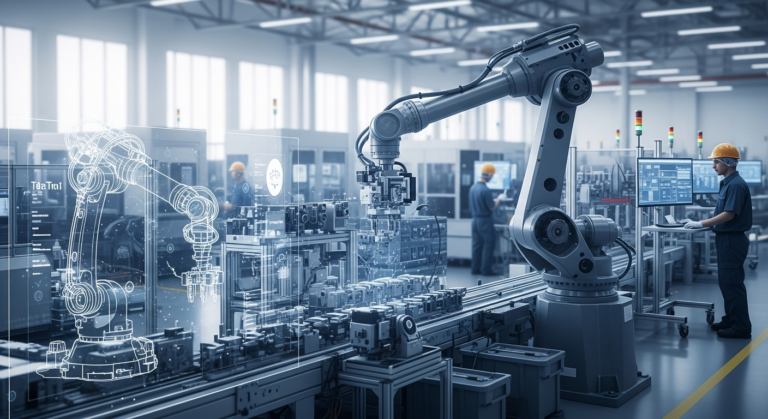
Construct the geometric and kinematic 3D model. Apply physics-based parameters. From a cost accounting perspective, use this virtual model to run simulation batches. By analyzing the simulated power consumption, cycle times, and machine wear, you can calculate highly accurate machine overhead rates and update your standard BOM routings prior to the annual cost roll.
Step 5: Synchronize, Activate, and Measure Variances
Connect the live data pipeline to the virtual model. The twin now mirrors the physical asset. Finance should monitor a real-time dashboard tracking:
- Purchase Price Variance (PPV) impacts based on real-time scrap.
- Labor Efficiency Variance.
- Variable Overhead Spending Variance.
Common Mistakes to Avoid
ERP Sub-Ledger Decoupling
Mistake: Operations builds a brilliant digital twin that functions in an IT silo, failing to push yield and scrap data back into the ERP.
Result: The digital twin reports high efficiency, but the financial statements show massive negative inventory adjustments during the physical stocktake. Integration with the ERP inventory sub-ledger is non-negotiable.
Over-Capitalization or Missed Capitalization
Mistake: Expensing all implementation costs, which unnecessarily depresses EBITDA, or capitalizing training and data migration costs (which must be expensed). Strict adherence to software capitalization standards is required to pass audit scrutiny.
Failing to Update Standard Costs
Mistake: Using the digital twin to improve physical throughput but leaving legacy standard costs in the ERP. If the twin reduces a machine cycle from 45 seconds to 38 seconds, standard routings must be updated. Otherwise, the P&L will show continuous, misleadingly massive favorable absorption variances that distort margin analysis for pricing decisions.
Analyzing the Final Result and Financial Impacts
The transition from pilot implementation to operational optimization yields quantifiable impacts on the balance sheet and income statement.
Validating Twin Accuracy Against the GL
Compare the twin’s simulated output against physical inventory observations and General Ledger actuals.
- Financial Matrix: Aluminum Casting Cell 4 (Pre vs. Post-Twin)
- Metric | Pre-Twin (Actual) | Post-Twin (Actual) | Variance Impact
- Scrap Rate | 12.5% | 3.8% | $285k Favorable Material Usage
- Machine Uptime | 71% | 89% | $140k Favorable Overhead Volume
- WIP Inventory Accuracy | 82% | 99.2% | Negligible Stocktake Write-offs
Leveraging Predictive Maintenance for Asset Lifecycle Management
Instead of running assets to failure (incurring emergency maintenance Opex and lost production), predictive maintenance allows for scheduled repairs. This preserves the asset’s residual value, justifies the extension of depreciation schedules (improving short-term profitability), and allows procurement to negotiate better payment terms for replacement parts by ordering with standard lead times rather than expedited freight.
Scaling and Strategic Site Rationalization
Once proven, scaling the digital twin across the enterprise unlocks massive structural cost savings. In a prior scenario, modeling plant capacity via digital twins proved that consolidating two legacy manufacturing sites ($60M combined turnover) into a single optimized facility was mathematically viable.
- Result: By simulating the optimal workflow and eliminating duplicated fixed overheads, the rationalization was executed seamlessly, delivering >$1.4M in annualized cash savings without disrupting customer SLAs. Furthermore, the verified data models supported R&D tax credit applications, securing $750K by proving the experimental nature of our integrated automation processes.