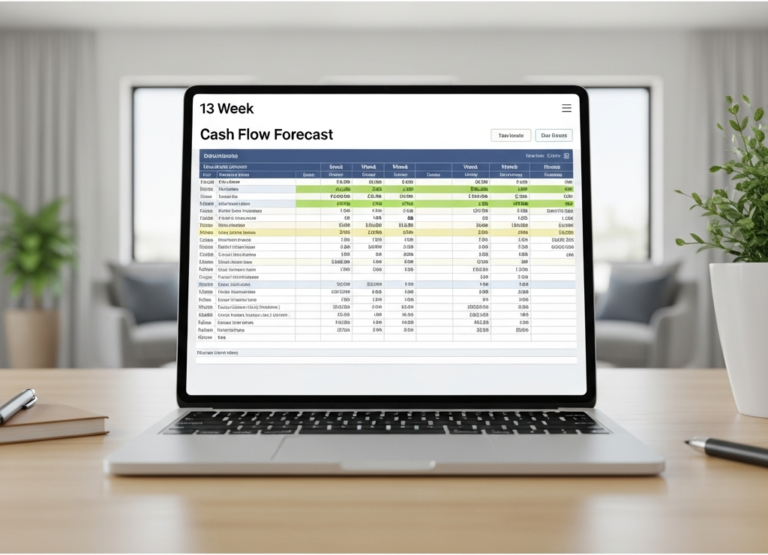
Best Business Credit Cards for Manufacturing Companies
Best Business Credit Cards for Manufacturing Companies Cash flow is the undeniable lifeblood of the manufacturing industry. Unfortunately, the inevitable gap between purchasing raw materials and receiving payment for finished goods can easily stifle your company’s growth. When your capital is tied up in inventory on the warehouse floor, taking on new orders becomes a…

Best Business Credit Cards for Manufacturing Companies
Cash flow is the undeniable lifeblood of the manufacturing industry. Unfortunately, the inevitable gap between purchasing raw materials and receiving payment for finished goods can easily stifle your company’s growth. When your capital is tied up in inventory on the warehouse floor, taking on new orders becomes a financial balancing act.
Atomic Definition: A Cash Flow Gap is the time delay between when a business pays its suppliers for materials and when it receives payment from customers for the final product.
To survive and thrive, plant managers and business owners need a strategic financial tool. Business credit cards offer a brilliant solution to extend your accounts payable and bridge these frustrating cash flow gaps. Instead of tapping into expensive lines of credit, you can use these cards to earn significant rebates on high-volume spending.
Ultimately, this guide is designed to help you find the best business credit cards manufacturing companies can use to optimize operational expenses. By selecting the right financial products, you can effortlessly maximize your purchasing power and protect your bottom line.
Top Contenders: Evaluating the Best Business Credit Cards Manufacturing Companies Can Leverage
Not all credit cards are built to handle the rigorous financial demands of a production facility. Here is a breakdown of the top contenders that cater specifically to the high costs and unique cycles of the manufacturing industry.
Card Option 1: The Best for High-Volume Raw Material Purchases
When you are constantly ordering bulk steel, specialized plastics, or packaging materials, you need a card that rewards every single dollar. The Capital One Spark 2% Cash Plus (or similar flat-rate cards) is an ideal choice for this type of heavy, consistent spending.
Atomic Definition: A Flat-Rate Cash-Back Card is a credit card that earns the exact same percentage of rewards on every purchase, regardless of the spending category.
- Value for Money: This card offers uncapped 2% cash back on every purchase you make. While there is an annual fee, the generous sign-up bonus and the sheer volume of cash back earned on raw materials quickly offset this cost.
- Pros and Cons:
- Pro: Predictable, straightforward rewards with no categories to track.
- Pro: No preset spending limit, giving you purchasing flexibility.
- Con: It is a charge card, meaning the balance must be paid in full every month to avoid steep penalties.
- Con: High spending requirements are usually needed to unlock the introductory sign-up bonus.
- Who This Is For: This card is perfect for manufacturers with consistent, heavy monthly spend on inventory. It is designed for businesses that have the cash to pay off their balance monthly but want a straightforward cash flow injection via rewards.
Card Option 2: The Best for Heavy Equipment and Long Float Times
Upgrading machinery or repairing a vital assembly line component can be incredibly expensive. The American Express Blue Business Cash™ Card (or a similar 0% APR card) is fantastic for absorbing these sudden, large capital expenditures.
Atomic Definition: A 0% Introductory APR is a promotional period where a credit card issuer charges no interest on new purchases for a set number of months.
- Value for Money: The true financial value here lies in the 0% introductory APR on purchases for the first 12 months. This acts as a free, short-term loan, allowing you to finance critical equipment without paying a dime in interest.
- Pros and Cons:
- Pro: The ability to finance expensive machinery over time, interest-free.
- Pro: Usually comes with no annual fee, keeping holding costs low.
- Con: Lower credit limits compared to premium corporate cards or charge cards.
- Con: Cash-back rewards are often capped at a certain spending threshold (e.g., 2% on the first $50,000, then 1%).
- Who This Is For: This card is built for growing manufacturing facilities that need to upgrade equipment or expand operations. It allows you to invest in your infrastructure without immediately draining your daily operating cash reserves.
Card Option 3: The Best for Global Supply Chains and No Preset Spending Limits
If your manufacturing business relies on importing components internationally, travel and foreign transaction fees can quietly eat into your margins. Cards like the Capital One Spark Miles or the Business Platinum Card® from American Express are tailored for global operations.
Atomic Definition: No Preset Spending Limit means the card does not have a fixed credit limit. Instead, purchasing power adapts dynamically based on your payment history, credit record, and current financial resources.
- Value for Money: These premium cards provide massive ROI by waiving foreign transaction fees, which normally add a 3% surcharge to international purchases. They also offer flexible purchasing power that adapts seamlessly to your seasonal manufacturing cycles.
- Pros and Cons:
- Pro: Immense buying power to handle sudden surges in international supply orders.
- Pro: Elite travel perks, lounge access, and insurance for executives visiting overseas suppliers.
- Con: Very steep annual fees, often ranging from $400 to nearly $700.
- Con: Rewards are generally paid in travel miles or points, which requires extra effort to convert to statement credits.
- Who This Is For: Large-scale manufacturers importing components internationally will find the most value here. It is also the premier choice for executives who travel frequently to manage global supply chain logistics.
Buyer’s Guide: How to Choose the Right Card for Your Operations
Selecting a business credit card requires a deep understanding of your facility’s specific financial habits. Here is how to evaluate your operations to make the most profitable choice.
Analyzing Your Manufacturing Spend Categories
Before applying for a card, take a week to thoroughly audit your accounts payable. You need to know exactly where your capital is flowing each month.
Follow this simple framework to audit your expenses:
- Calculate Raw Material Costs: Determine how much you spend strictly on the physical components of your product.
- Evaluate Shipping and Freight: Add up your monthly costs for logistics, importing, and domestic shipping.
- Review Utility and Overhead Costs: Look at the expenses required to keep the warehouse lights on and machines running.
Once you have these numbers, you can choose between a tiered rewards card and a flat-rate card. If 80% of your budget goes to a specific category such as shipping, a tiered card offering 3% back on freight is ideal. If your expenses are widely distributed, a flat 2% cash-back card will yield better overall returns.
Understanding Float and Payment Terms
One of the most powerful aspects of a business credit card is its ability to artificially extend your cash flow runway. You can achieve this without incurring a single cent of interest by mastering the concept of “the float.”
Atomic Definition: Credit Card Float is the time between when you make a purchase on your credit card and when the payment for that purchase is actually due.
Most credit cards offer a grace period of 21 to 25 days after your billing cycle closes. If you make a massive raw material purchase on the first day of your billing cycle, you essentially get up to 55 days of interest-free financing. This gives your team nearly two months to manufacture the product, sell it, and collect payment before the credit card bill is due.
Credit Limits and Purchasing Power
In manufacturing, production demands can spike overnight due to a sudden large order from a new client. You must ensure your credit card has the horsepower to support these rapid shifts.
Choosing a card with a high or dynamic credit limit prevents your company from maxing out its available credit. Maxing out standard cards can negatively affect your business credit score by increasing your credit utilization ratio. Always look for charge cards or premium corporate cards that explicitly advertise “no preset spending limit” if your material costs fluctuate wildly.
Strategic Cash Flow Management: Beyond Just Making Purchases
Getting the card is only the first step. Utilizing it strategically will transform it from a simple payment method into an active revenue-generating tool.
Separating Operational Expenses from Capital Expenditures
Using specific credit cards for different types of expenses drastically streamlines your accounting and tax preparation. Mixing daily expenses with long-term asset purchases can create a nightmare for your bookkeeping team.
Atomic Definition: Capital Expenditures (CapEx) are funds a company uses to acquire, upgrade, and maintain physical assets such as property, plants, buildings, technology, or equipment.
Consider using a flat-rate cash-back card exclusively for Operational Expenses (OpEx) such as utilities, raw materials, and shipping. Then, assign a separate 0% APR card solely for Capital Expenditures (CapEx), such as purchasing forklifts or CNC machines. This clear division makes it incredibly easy to track depreciation and claim accurate tax deductions at the end of the fiscal year.
Reinvesting Rewards into the Bottom Line
The rewards generated by high-volume manufacturing spend are not just a nice perk; they are a legitimate secondary income stream. You must view these rewards as capital that can be reinvested directly into your bottom line.
Let’s look at the math:
- Imagine your facility spends $100,000 a month on raw materials and shipping.
- Using a flat 2% cash-back card, you earn $2,000 in cash back every single month.
- Over the course of a year, that totals $24,000 in tax-free rebates.
That $24,000 is enough to cover the annual salary of a part-time warehouse worker. Alternatively, it could entirely offset your facility’s utility costs for the year. By simply changing your payment method, you are actively increasing your company’s profit margins.
Frequently Asked Questions (FAQs)
Can I use a business credit card to buy heavy manufacturing machinery?
Yes, but it requires careful planning regarding credit limits and vendor fees. Many heavy machinery vendors charge a 2% to 3% processing fee if you choose to pay with a credit card.
You must calculate if the cash-back rewards or the 0% introductory interest period outweighs the vendor’s processing fee. If the vendor fee exceeds your rewards rate, traditional equipment financing or a term loan is usually the more cost-effective route.
Do I need a personal guarantee to get a business credit card for a manufacturing company?
Atomic Definition: A Personal Guarantee is a legal promise made by an individual to repay credit extended to a business if the business fails to do so.
For standard small business credit cards, you will almost always need to sign a personal guarantee, meaning your personal credit score is on the line. However, if you apply for a true “Corporate Card” (like Brex or Ramp), the issuer evaluates your business revenue and cash in the bank. Corporate cards typically do not require a founder’s personal guarantee, making them safer for your personal finances.
How do the best business credit cards manufacturing businesses compare to a standard line of credit?
Credit cards and lines of credit serve two completely different purposes in a manufacturing environment. Business credit cards offer incredible access speed, lucrative reward benefits, and interest-free grace periods for everyday expenses.
Conversely, a standard business line of credit offers much larger borrowing limits and significantly lower sustained interest rates. You should use credit cards for materials that will be paid off within 30 days, and rely on a line of credit for long-term cash deficits or massive expansion projects.
The Verdict
Matching the Card to Your Production Cycle
There is no single “perfect” card; the right choice depends entirely on your unique production cycle. The core decision factors always come down to value for money, cash-back alignment with your spending habits, and your need for upfront capital versus long-term rewards.
If your primary goal is to maximize returns on everyday material purchases, a 2% flat-rate card like the Spark Cash Plus is unbeatable. If you need to upgrade your facility without an immediate cash drain, a 0% APR card is your safest bet. Finally, if your operations span the globe, premium travel cards will seamlessly erase foreign transaction fees while protecting your traveling executives.
Final Recommendation and Next Steps
Do not let your cash flow dictate your production capacity. By integrating the right business credit card into your AP department, you can artificially extend your capital runway, earn thousands in annual rebates, and scale your operations faster.
Take a moment today to audit your largest monthly expenses. Select the card from our top contenders that best defends your cash flow margins. Apply now to secure your working capital, and give your manufacturing business the financial breathing room it needs to dominate the next quarter.