Inventory Carrying Costs Manufacturing: 6-Step Guide
Mastering the Math: How to Calculate Inventory Carrying Costs in Manufacturing In complex and fast-paced manufacturing, understanding your foundational metrics is the key to maintaining long-term profitability. You cannot effectively manage what you do not accurately measure. One of the most critical, yet frequently misunderstood, metrics is your carrying cost. Inventory carrying costs represent the…
Mastering the Math: How to Calculate Inventory Carrying Costs in Manufacturing
In complex and fast-paced manufacturing, understanding your foundational metrics is the key to maintaining long-term profitability. You cannot effectively manage what you do not accurately measure. One of the most critical, yet frequently misunderstood, metrics is your carrying cost.
Inventory carrying costs represent the total expenses associated with holding and storing unsold goods over a specific period. For manufacturing businesses, this extends far beyond a warehouse full of finished products waiting to be shipped. It also heavily includes raw materials, packaging supplies, and work-in-progress (WIP) inventory actively moving through your shop floor.
Accurately calculating the inventory carrying costs your manufacturing operations incur helps you optimize order quantities and significantly reduce waste. It also allows you to free up trapped cash flow that could be reinvested into growth. This step-by-step guide will walk you through exactly what data you need to gather, how to run the complex numbers, and how to arrive at a clear, actionable final result.
What You Need to Get Started
Before you can perform a reliable calculation, you must gather data from various departments across your manufacturing facility. Calculating carrying costs is a cross-functional effort that requires input from accounting, operations, and warehouse management.
Having accurate source material is the most important part of this process. Let’s look at the four categories of information you need to pull before you start doing the math.
Financial Records and Statements
You will need your most recent income statements and balance sheets to identify financing costs, property taxes, and total inventory value. This financial documentation acts as the baseline for your entire calculation.
Collaborate closely with your finance or accounting team to ensure these documents reflect the most current fiscal quarter or year. You will specifically want to isolate the line items that deal with debt interest and available capital.
Storage and Warehousing Data
Next, gather all expenses related to the physical space where your inventory is held. If you lease your facility, this includes your monthly warehouse rent. If you own the building, you will need your mortgage payments and property tax figures.
Storage data also encompasses facility upkeep. You should pull the following records:
- Monthly utility bills (electricity, water, heating, and cooling).
- Facility depreciation records from your accounting department.
- Janitorial services and general warehouse maintenance invoices.
Handling and Labor Costs
Handling costs are the direct expenses incurred to move, manage, and secure inventory within a facility. To calculate these, you must compile the payroll data for your dedicated warehouse staff, material handlers, and security personnel.
Do not forget to include the equipment required to move your stock. You will need the maintenance, fuel, and depreciation costs for equipment like forklifts, automated guided vehicles (AGVs), and conveyor systems.
Risk and Opportunity Cost Figures
Finally, you must gather the data that quantifies the inherent risks of holding physical stock. Obtain your most recent insurance premium statements that cover your inventory.
You also need to gather historical data on inventory shrinkage and your cost of capital. Inventory shrinkage is the loss of products between the point of manufacture and the point of sale due to theft, damage, or administrative errors. Knowing your company’s cost of capital will help you determine the opportunity costs of tied-up cash.
Step-by-Step Guide to Calculating Inventory Carrying Costs
Now that you have gathered all the necessary documents and reports, it is time to crunch the numbers. Follow this logical progression to move from raw data to your final carrying cost percentage.
It helps to calculate these figures on an annualized basis. Ensure all the numbers you use represent a full twelve months of operations to maintain consistency.
Step 1: Determine Your Capital Costs
Capital costs are usually the largest single component of your carrying costs. Capital costs are the financial expenses of tying up money in inventory, including interest paid on debt and lost investment opportunities.
First, calculate the interest paid on any loans or credit lines used to purchase raw materials and finance production. Next, calculate your opportunity cost. This is the estimated return on investment (ROI) you could have safely earned if that money was invested elsewhere, such as in high-yield accounts or new manufacturing equipment.
Step 2: Calculate Storage Space Costs
Add up the annual costs of physically housing your inventory. Combine your facility rent or mortgage payments, electricity, heating, cooling, and property taxes into one sum.
If your storage space shares a roof with your production floor, you must prorate this cost. Calculate the total square footage of your facility, determine the exact percentage dedicated strictly to storage, and apply that percentage to your total facility costs.
Step 3: Assess Inventory Service Costs
Inventory service costs are the expenses required to maintain, manage, and protect physical stock. Begin by tallying your inventory insurance premiums and any specific taxes paid on physical goods held in your state or municipality.
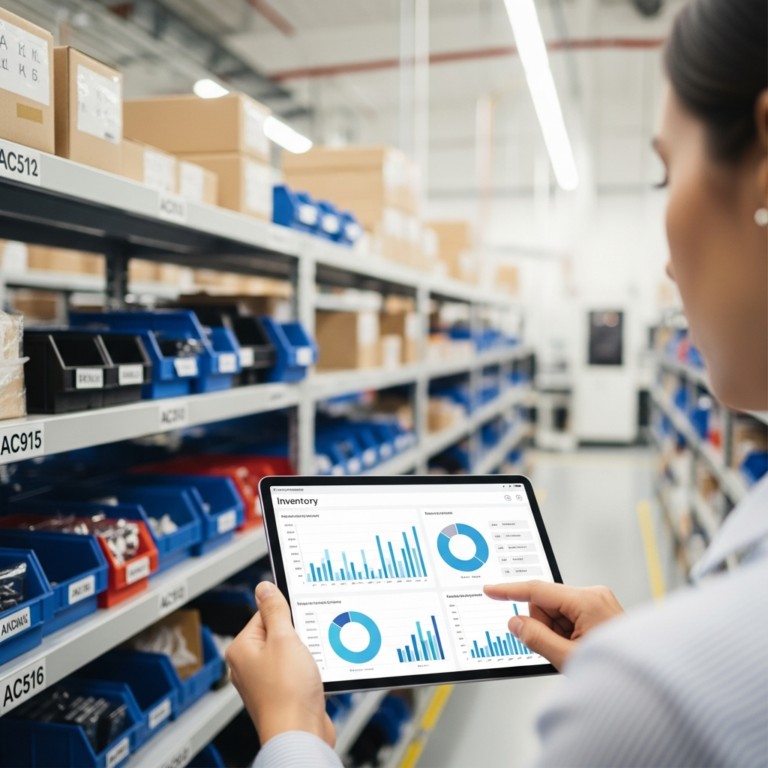
You must also include the technological costs of managing this stock. Factor in the annual licensing fees for your inventory management software, as well as the cost of IT hardware like barcode scanners and RFID tracking systems.
Step 4: Factor in Inventory Risk Costs
This step calculates the financial loss from inventory that never makes it to sale. Sum up the annual costs of shrinkage, accidental damage, and administrative errors that cause stock to vanish from your books.
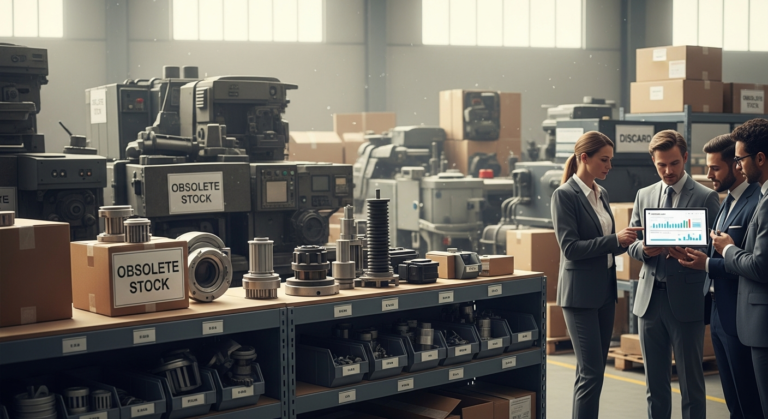
You must also calculate the cost of obsolescence. Inventory obsolescence is the loss of value when parts or products become outdated, expire, or are no longer usable in current production runs. Add the total value of written-off obsolete stock to your risk costs.
Step 5: Find Your Total Annual Inventory Value
Before you can find your carrying cost percentage, you must determine the average value of your inventory over the year. Inventory levels fluctuate, so using a single day’s snapshot is highly inaccurate.
To find this number, add your beginning inventory value for the year to your ending inventory value for the year. Then, divide that sum by two. This gives you a reliable average inventory value to use in your final calculation.
Step 6: Apply the Formula for the Final Result
You now have all the individual components required to finish the math. First, sum up the costs from Steps 1 through 4 to get your total holding costs in a dollar amount.
Next, use the following formula to get your carrying cost percentage:
(Total Holding Costs / Total Annual Inventory Value) x 100 = Final Inventory Carrying Cost Percentage.
For example, if your total holding costs are $250,000 and your average annual inventory value is $1,000,000, your carrying cost percentage is 25%.
Common Mistakes to Avoid
Calculating carrying costs requires meticulous precision and attention to detail. Even a small mathematical error or omitted variable can skew your understanding of your company’s financial health.
Avoid these frequent pitfalls to ensure your data is highly reliable. Accurate data empowers better operational decisions.
Ignoring Opportunity Costs
Many manufacturers only track out-of-pocket expenses, like rent and utility bills. They completely forget to account for the capital tied up in inventory that could have been utilized elsewhere.
Opportunity cost is the potential financial return you forfeit by choosing to tie up cash in inventory instead of alternative investments. If you have a million dollars sitting in excess steel coils, that is a million dollars you cannot spend on R&D, marketing, or automated machinery. Always include a reasonable interest rate on that trapped cash.
Relying on Outdated Property Valuations
Storage space costs constantly fluctuate due to economic conditions and local real estate markets. Using rent, utility, or property tax figures from five years ago will artificially lower your carrying costs.
Always use your current, annualized statements. If your property taxes increased by 15% this year, that increase must be reflected in your carrying cost calculations.
Overlooking Work-in-Progress (WIP) Inventory
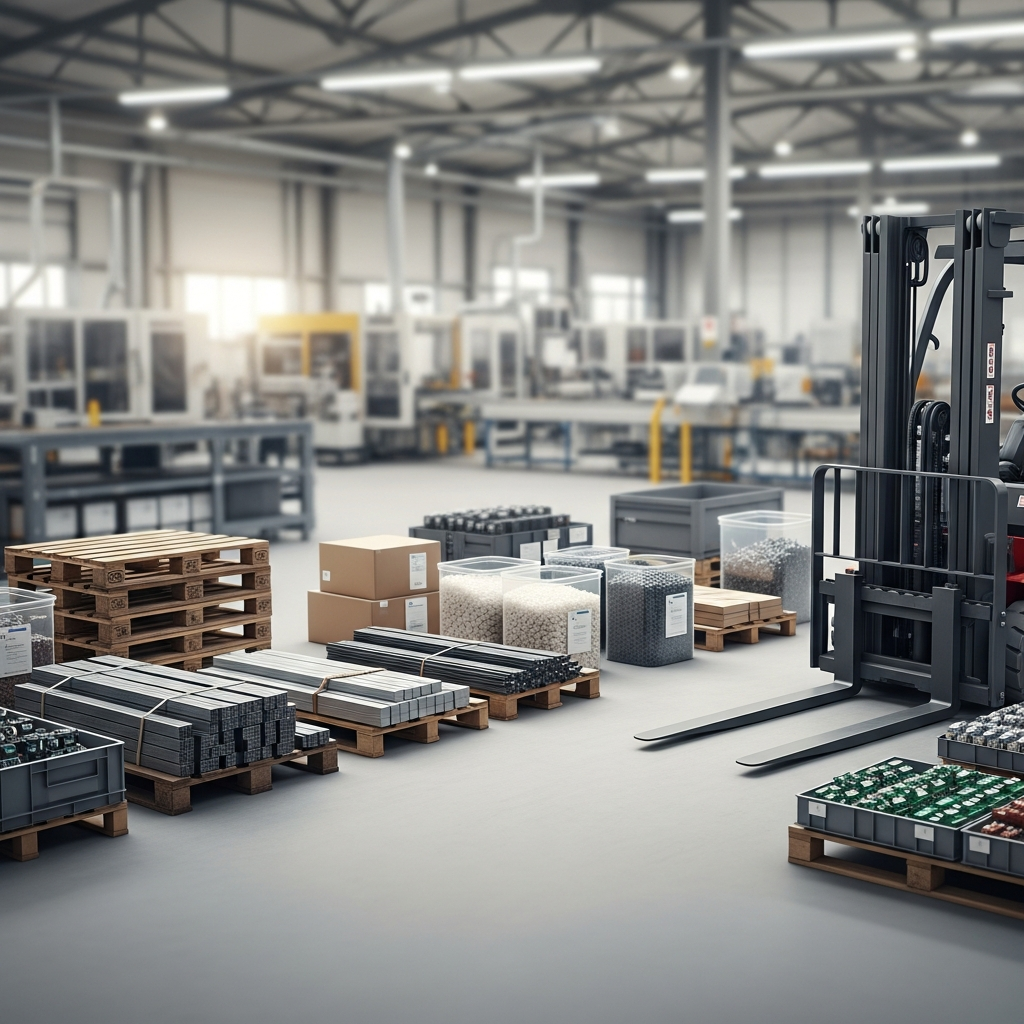
In manufacturing, carrying costs apply to raw materials and WIP, not just finished goods sitting on a pallet. Work-in-progress (WIP) inventory includes partially finished goods that are currently at various stages of the manufacturing cycle.
These items are occupying space, utilizing labor, and tying up capital. Failing to include your WIP leads to highly inaccurate total inventory values and creates a blind spot in your production pipeline.
Treating All Inventory Equally
Different materials and products naturally carry different risk profiles. A blanket risk assessment will likely result in inaccurate obsolescence calculations.
Perishable goods or highly technical electronic components have a much higher obsolescence and spoilage rate than basic fasteners or steel stock. Categorize your inventory by risk level and apply different depreciation models to highly volatile materials.
Proven Strategies to Optimize and Reduce Costs
Once you have your final carrying cost percentage, you can finally take action to improve your bottom line. If your percentage is higher than you would like, do not panic. There are actionable steps you can take to lower it.
Here are three proven strategies to optimize your operations and shrink your carrying expenses.
Implement Just-In-Time (JIT) Manufacturing
One of the most effective ways to lower carrying costs is to simply hold less inventory. Just-In-Time (JIT) manufacturing is a production strategy where raw materials arrive exactly when they are needed for the assembly process.
By closely aligning your raw material orders with your production schedules, you minimize the amount of time inventory sits idle in the warehouse. This drastically reduces storage requirements, minimizes capital tie-up, and lowers the risk of obsolescence.
Optimize Warehouse Layout
Sometimes the issue is not how much inventory you have, but how you manage it. Redesign your warehouse floor plan to maximize vertical space and eliminate dead zones.
Consider implementing high-density racking systems and optimizing your pick paths. This improves picking efficiency, which directly reduces both the physical footprint of your storage and the labor costs associated with material handling.
Leverage Advanced ERP Systems
Modern manufacturing requires modern digital tools. Use technology to remove the guesswork from your purchasing and storage operations.
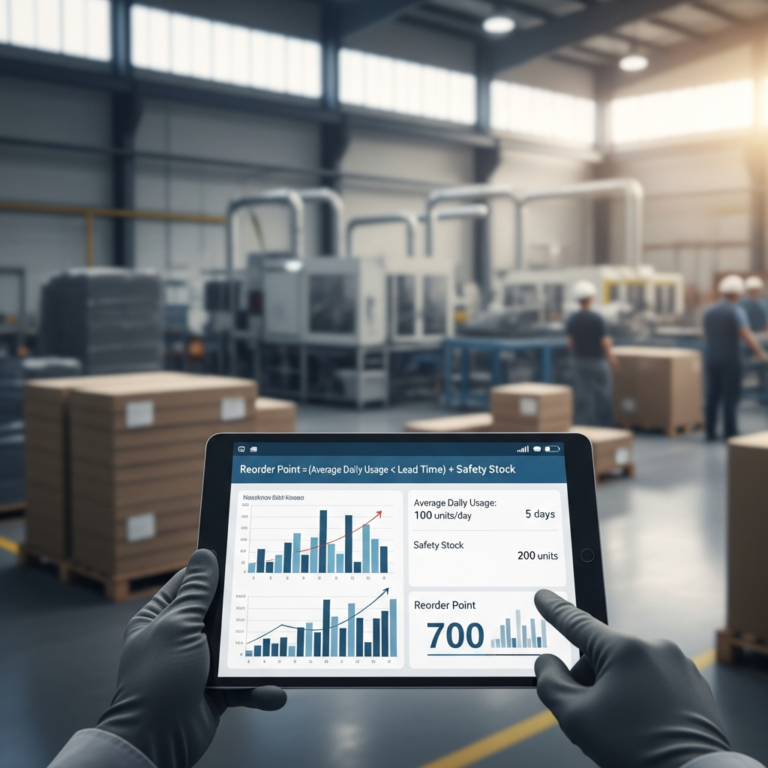
An Enterprise Resource Planning (ERP) system is an integrated software platform that manages and automates a company’s core business processes. A robust ERP can accurately forecast demand, track shrinkage in real-time, and automate reorder points, ensuring you never carry more stock than is absolutely necessary.
Frequently Asked Questions
What is a normal inventory carrying cost percentage in manufacturing?
While it varies heavily by specific sub-sector and industry, there is an accepted baseline. A standard benchmark for inventory carrying costs in manufacturing typically falls between 15% and 30% of the total inventory value. If your calculation yields a number above 30%, it is a strong indicator that you are holding excess stock or your warehousing processes are inefficient.
How often should a manufacturing business calculate these costs?
It is a widely accepted best practice to run a comprehensive carrying cost calculation annually to align with your fiscal year-end reporting. However, high-volume manufacturers may benefit significantly from quarterly reviews. Calculating this metric every three months allows you to pivot and adjust to rapidly changing supply chain dynamics and raw material prices.
Does the type of manufacturing (discrete vs. process) affect carrying costs?
Yes, the type of manufacturing heavily influences your specific risk and storage costs. Process manufacturing (e.g., chemicals, food, beverages) often carries higher risk costs due to the potential for spoilage, expiration, and stringent climate-control storage requirements. Conversely, discrete manufacturing (e.g., auto parts, electronics) might face much higher obsolescence costs if consumer trends or product designs change rapidly.