Factory Automation With Digital Twins Robotics & MES
The transition to Industry 4.0, integrating digital twins, autonomous robotics, and MES (advanced manufacturing execution systems), requires a fundamental shift in how corporate finance models capital expenditure (CAPEX), values inventory, and absorbs manufacturing overhead. This is not merely an operational upgrade; it is a structural transformation of the cost-volume-profit (CVP) relationship. By digitizing the factory…
The transition to Industry 4.0, integrating digital twins, autonomous robotics, and MES (advanced manufacturing execution systems), requires a fundamental shift in how corporate finance models capital expenditure (CAPEX), values inventory, and absorbs manufacturing overhead. This is not merely an operational upgrade; it is a structural transformation of the cost-volume-profit (CVP) relationship.
By digitizing the factory floor, financial controllers transition from historical variance analysis to predictive financial modeling, enabling real-time cost control, accelerated month-end closes, and optimized working capital velocity.
This guide outlines the strategic financial and operational steps to implement a smart factory ecosystem that leverages automated robotics and digital twin architecture.
What You Need: Prerequisites for Advanced Manufacturing
Hardware and Physical Infrastructure
- IIoT Sensors and Edge Devices: Required for real-time machine telemetry. Financial impact: Classified as CAPEX; alters depreciation schedules.
- Next-Generation Robotics (AMRs, Cobots): Shifts cost structures from variable direct labor to fixed factory overhead.
- Network Infrastructure (5G/Industrial Ethernet): The physical data pipeline required to maintain sub-ledger integrity between the factory floor and the general ledger.
Software and Cloud Architecture
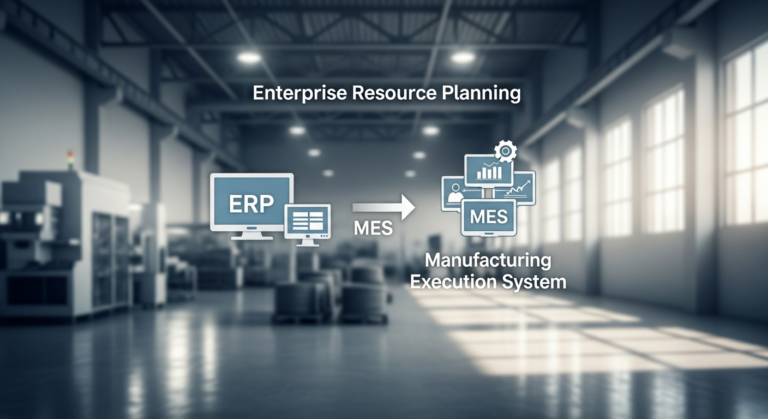
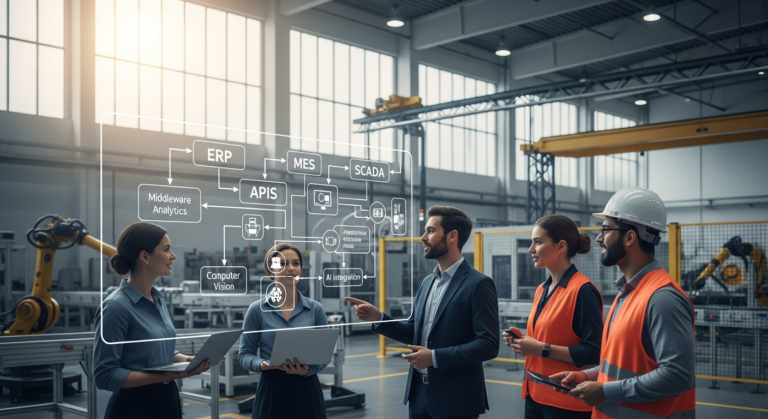
- Integrated ERP and MES: The MES must interface directly with the ERP to automate Bill of Materials (BOM) rollups, routing updates, and work-in-progress (WIP) valuation.
- Digital Twin Software: Acts as a continuous, virtual sandbox for predictive Activity-Based Costing (ABC) and scenario testing.
- Predictive Analytics Engines: Replaces reactive maintenance OPEX with predictive algorithms, minimizing unabsorbed overhead caused by machine downtime.
Organizational and Financial Readiness
- Cross-Functional Tiger Team: Requires tightly integrated workflows between Industrial Engineering (IE), IT, and Plant Controllers.
- Capital Allocation Matrix: A phased CAPEX budget utilizing discounted cash flow (DCF) modeling, incorporating localized tax incentives (e.g., R&D tax credits for software/automation integration).
Step-by-Step Implementation Guide
1: Mapping the Physical Environment and Baseline Data
- Workflow Audit: Conduct a time-and-motion study alongside a standard cost audit. Identify baseline direct material yields, labor efficiency variances (LEV), and machine hours.
- Sensor Deployment: Install IIoT on legacy assets.
- Controller Shortcut: Do not wait for perfect data. Use 80/20 proxy standard rates for initial baseline mapping. Focus sensor deployment on bottleneck work centers where machine downtime causes the highest unabsorbed overhead.
2: Deploying Robotics for Physical Automation
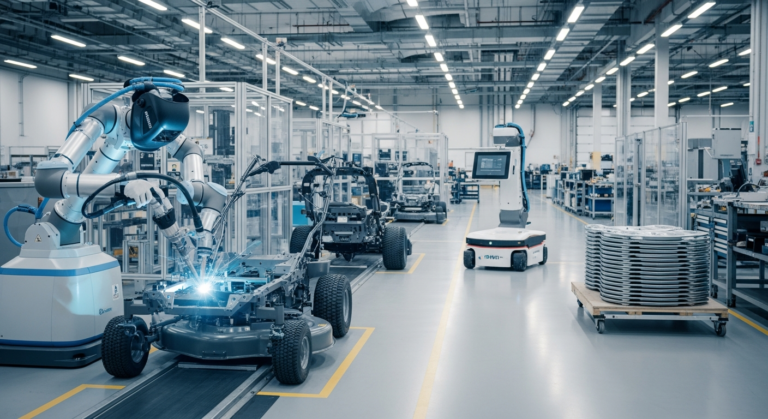
- Target Identification: Deploy robotics in high-repetition, high-scrap zones. For example, replacing manual welding with robotic cells to stabilize direct material usage variances.
- M2M Integration: Establish machine-to-machine protocols. Ensure the MES logs machine hours and automated material consumption in real-time to backflush inventory.
- Cost Reallocation: Update routing tables in the ERP. Reclassify former direct labor expenses into fixed overhead depreciation, recalculating standard overhead absorption rates based on the new practical capacity.
3: Constructing the Digital Twin Environment
- Virtual Mapping: Import CAD schematics and physical data inputs into the simulation software.
- Financial Synchronization: Link the Digital Twin to the ERP’s standard costing module. This allows the twin to simulate not just physical bottlenecks, but the resulting financial impact on gross margin and per-unit overhead absorption.
- Scenario Testing: Run predictive production runs to stress-test BOM rollups and forecast labor rate variances before physical production begins.
4: Synchronizing and Activating the System
- Bi-Directional Data Flow: Activate real-time data feeds. Physical floor data updates the twin; the twin’s optimized routing pushes commands back to the physical MES.
- Automated Cycle Counting: Utilize sensor data and automated guided vehicles (AGVs) to perform perpetual cycle counts. This mitigates inventory shrinkage, verifies FIFO/LIFO layer integrity, and satisfies auditor requirements, ultimately eliminating the need for costly wall-to-wall annual physical stocktakes.
Real-World Example In 2001 Utilizing Technology Advances:
A $50M turnover discrete manufacturer operating in two countries with 100 employees in total. The business required site rationalization to consolidate into a single automated production facility, aiming to capture $1.4M in annual cost savings.
Opportunity: Technology advances in communication infrastructure provided the opportunity to directly connect the two sites, rationalize production to the primary site, and relocate and convert the secondary site to solely a warehouse and distribution center.
Cost Savings: Savings were made on the property lease, factory labor and overhead reduction, and IT software costs.
Working Capital Reduction: Cash benefit from elimination of raw materials and work-in-progress estimated at $500K.
Hypothetical 2026 Scenario Based on Technology Advances:
Implement a phased Industry 4.0 rollout. Manual foundry pouring and welding to be replaced with six Cobots, managed by an overarching MES tied to a Digital Twin.
Financial Impact & ROI Matrix:
| Metric | Pre-Automation (Legacy Costing) | Post-Automation (Industry 4.0) | Variance / Impact |
|---|---|---|---|
| Scrap Rate (Casting) | 4.5% of raw materials | 1.2% of raw materials | +$280K favorable material variance |
| Labor Efficiency | -$120K unfavorable LEV p.a. | +$45K favorable LEV p.a. | +$165K direct labor savings |
| Site Overhead | $2.2M (2 separate facilities) | $800K (1 consolidated site) | +$1.4M fixed OPEX reduction |
| Month-End Close | 12 Business Days | 5 Business Days | 60% acceleration in financial reporting |
| WIP Inventory | $1.8M average holding | $900K average holding | $900K working capital released |
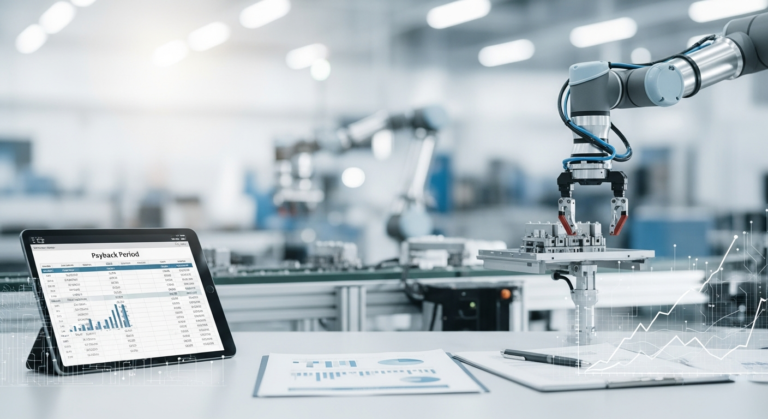
Strategic Benefit: The digital twin accurately modeled the consolidation, proving that the increased throughput of the cobots at Site 1 could absorb the volume from Site 2 without triggering bottlenecks. Furthermore, documenting the system integration process enables a claim for a $750K R&D tax credit, reducing the net CAPEX payback period to 14 months.
Common Mistakes to Avoid
Misaligning CAPEX vs. OPEX in Implementation
- The Mistake: Capitalizing routine training costs or expensing software customization that should be capitalized.
- The Fix: Strictly adhere to GAAP/IFRS guidelines regarding internally developed software. Capitalize direct integration and coding costs; expense routine workforce training and data migration.
Ignoring the “Unabsorbed Overhead” Trap
- The Mistake: Automating a single sub-assembly line, drastically increasing its throughput, but failing to increase downstream demand or final assembly capacity.
- The Fix: Use the Digital Twin to map the Theory of Constraints. Faster production without matched demand simply builds WIP inventory, tying up cash and artificially inflating short-term profitability through over-absorbed overhead, which inevitably reverses.
Siloing IT and Finance Data Streams
- The Mistake: Running the Digital Twin on an Operational Technology (OT) network without integrating it into the central ERP.
- The Fix: Mandate API integration so that the MES backflushes inventory and records scrap in the ERP sub-ledgers instantaneously. Disconnected systems lead to massive stocktake write-downs at year-end.
Retaining Obsolete Standard Costs
- The Mistake: Operating new automated lines using legacy direct labor routing times and old overhead absorption rates.
- The Fix: Immediately execute a BOM and routing rollup upon commissioning new robotics to prevent distorted gross margin reporting.
Final Result: The Fully Automated Smart Factory
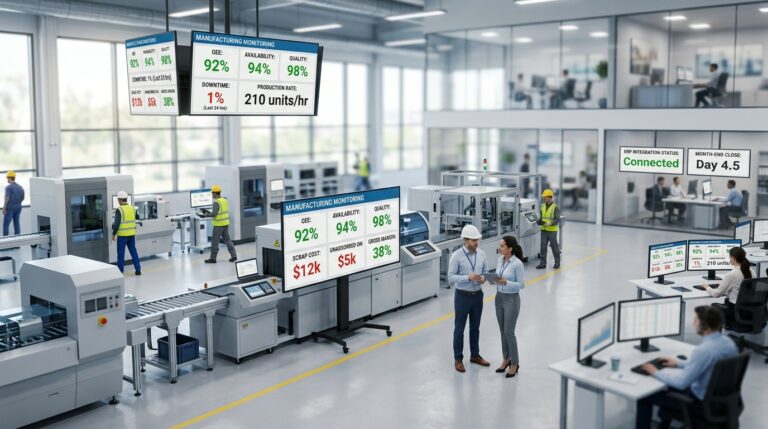
5-Day Month-End Close and Automated Controls
Real-time WIP tracking, automated backflushing, and perpetual cycle counting remove the need for manual accruals and extensive physical inventory reconciliations. Finance teams transition from data-gatherers to strategic analysts.
Predictive Maintenance and Capital Preservation
The Digital Twin predicts component degradation (e.g., CNC spindle wear), allowing maintenance to be scheduled during non-productive shifts. This maximizes Overall Equipment Effectiveness (OEE) and extends the useful life of capitalized assets, directly improving Return on Capital Employed (ROCE).
Margin Protection and Strategic Agility
With dynamic overhead allocation and real-time variance reporting, the factory can instantly pivot production to accommodate custom orders or supply chain disruptions without destroying gross margins.
Frequently Asked Questions
How does a Digital Twin differ from standard 3D CAD simulation from an accounting perspective?
A 3D simulation is a static, sunk-cost tool used in R&D. A Digital Twin is a dynamic, yielding asset tied to live factory data. It continuously informs the ERP’s financial models, updating standard costs, forecasting yield variances, and optimizing WIP inventory valuation in real-time.
How do we account for legacy equipment that is being replaced or augmented?
If retrofitted with sensors, the legacy asset remains on the books, and the sensor/PLC CAPEX is depreciated over the asset’s remaining useful life. If replaced entirely by robotics, the unamortized book value of the legacy equipment must be written off as a loss on disposal, which must be factored into the new automation ROI model.
Is a massive upfront capital investment strictly required to get started?
No. Experienced controllers mandate a modular CAPEX approach. Start by integrating sensors on critical bottlenecks to stabilize existing variances. Use the resulting cash flow improvements and reduced downtime OPEX to self-fund the subsequent integration of cobots and comprehensive Digital Twin software.