Best Barcode Scanners and Systems for Manufacturing Inventory
Select the Best Barcode Scanners and Systems for Manufacturing Inventory A manufacturing barcode system is the strategic combination of rugged hardware scanners and integrated inventory accounting software used to track materials across the production floor. If you are still relying on manual data entry to track your factory’s inventory, your bottom line is quietly bleeding….
Select the Best Barcode Scanners and Systems for Manufacturing Inventory
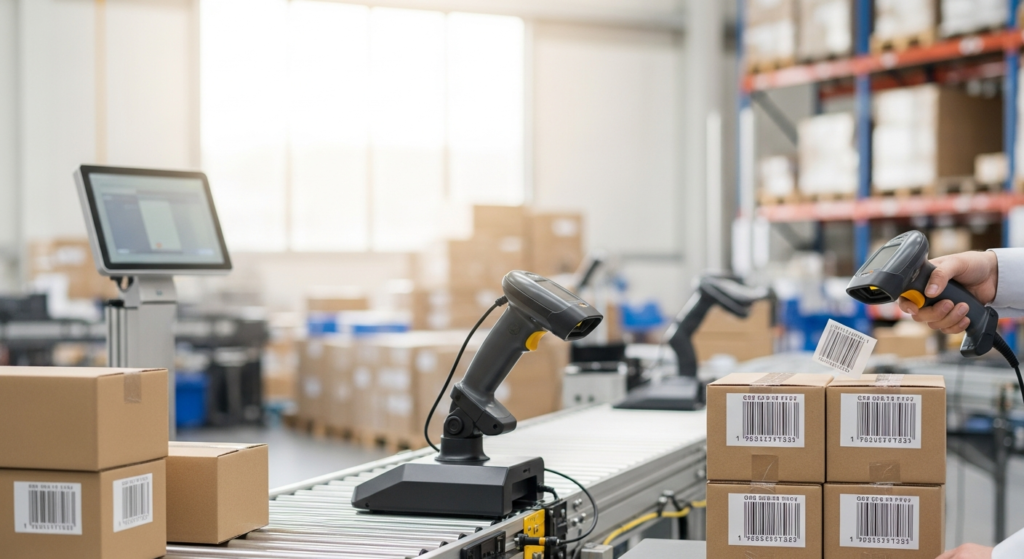
A manufacturing barcode system is the strategic combination of rugged hardware scanners and integrated inventory accounting software used to track materials across the production floor.
If you are still relying on manual data entry to track your factory’s inventory, your bottom line is quietly bleeding. Manual tracking is a notorious drain on resources, leading to lost raw materials, misplaced finished goods, and wildly inaccurate accounting data. When floor workers are forced to write down serial numbers or type them into a spreadsheet, human error is completely unavoidable.
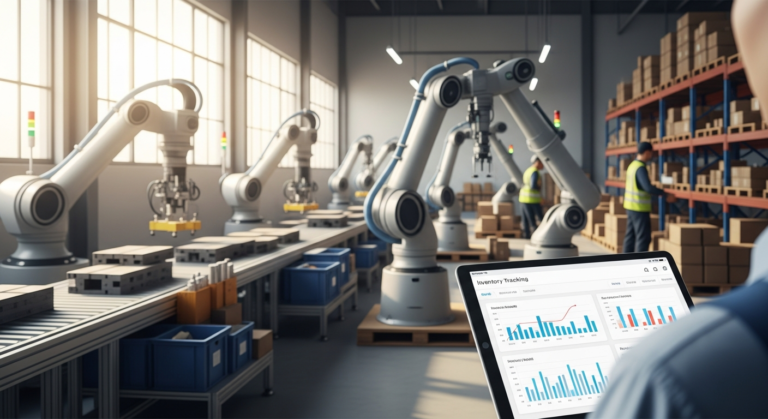
The solution is to modernize your facility with the best barcode system manufacturing operations rely on today. Upgrading to a professional, automated tracking solution streamlines your daily workflows and eliminates costly data entry errors. More importantly, it creates a real-time bridge between the physical factory floor and your financial ledger.
Investing in the right scanning system is not just another operational expense to write off. It is a strategic, revenue-protecting move that delivers massive long-term return on investment (ROI). Let’s explore the top systems on the market, what to look for when buying, and how these tools will transform your inventory accounting.
Top Contenders: Evaluating the Best Barcode Systems
Choosing the right hardware and software combination is critical for your factory’s success. Here is an objective breakdown of the industry’s top contenders, tailored for different sizes and types of manufacturing operations.
1. Zebra 3600 Ultra-Rugged Series (Paired with Tier 1 ERPs)
In extreme manufacturing environments, the Zebra 3600 Ultra-Rugged Series is the undisputed industry standard. These devices are built like tanks, designed specifically to survive the harshest conditions a factory floor can dish out. Whether you are running a chemical plant or a heavy metal fabrication shop, Zebra devices perform flawlessly.
At first glance, the upfront hardware cost of a Zebra scanner might induce sticker shock. However, the value for money becomes incredibly clear when you calculate the long-term savings. Because these scanners rarely break, you eliminate the cost of frequent replacements and the devastating expense of operational downtime.
Pros and Cons:
- Pros: Indestructible build quality (IP67 rating), exceptional battery life that lasts multiple shifts, and the ability to instantly read damaged, dirty, or poorly printed barcodes.
- Cons: A premium price point, and arguably overkill for clean, light assembly environments.
Who This Is For:
Heavy manufacturing facilities, chemical processing plants, and environments highly prone to dust, water, extreme temperatures, and concrete drops.
2. Honeywell Granit XP Series (Paired with Mid-Market MRPs like Katana or Fishbowl)
The Honeywell Granit XP Series represents the perfect mid-to-high-tier option for modern factories. It masterfully balances rugged durability with seamless integration capabilities. This makes it an ideal companion for mid-market Material Requirements Planning (MRP) platforms such as Katana, Fishbowl, or Odoo.
This system hits the absolute sweet spot for growing manufacturers. It provides the reliable scaling and robust performance your facility needs, without demanding the massive enterprise-level price tags of top-tier systems. It is an investment in growth that won’t entirely break the bank.
Pros and Cons:
- Pros: Excellent scanning range (allowing workers to scan high warehouse racks from forklifts), highly customizable software integrations, and a comfortable ergonomic design.
- Cons: Often requires a dedicated IT support professional to bridge the initial software-hardware connection effectively.
Who This Is For:
Mid-sized manufacturers who are rapidly scaling their operations and require seamless, highly accurate inventory accounting integration.
3. Wasp Barcode Technologies (All-in-One Hardware & Software)
Wasp Barcode Technologies offers a fundamentally different approach by providing an out-of-the-box, all-in-one solution. Instead of forcing you to piece together hardware from one vendor and software from another, Wasp provides both the scanning devices and their proprietary inventory management software.
The value for money here is exceptional due to the cost-efficiency of bundled solutions. You completely bypass the complex, often expensive integration fees associated with linking third-party hardware to separate ERP systems. You simply unbox the system, set it up, and start scanning.
Pros and Cons:
- Pros: Plug-and-play readiness, a highly affordable entry price, and dedicated customer support for both hardware and software under one roof.
- Cons: Significantly less flexibility if you eventually need to migrate to a highly complex, legacy ERP system in the future.
Who This Is For:
Small manufacturers, boutique assembly lines, or custom shops looking to transition away from spreadsheets to their very first automated tracking system.
Buyer’s Guide: Choosing the Right Manufacturing Barcode System
Navigating the barcode system market can be overwhelming. To ensure you make a profitable, long-lasting investment, you need to evaluate three major criteria before signing a purchase order.
Hardware Durability and IP Ratings
Consumer-grade scanners and commercial retail scanners are virtually guaranteed to fail on a factory floor. They simply cannot withstand the vibration, grease, and accidental drops that happen during a typical manufacturing shift. You need equipment built explicitly for industry.
An IP rating (Ingress Protection) is a standardized measurement indicating how well a device’s casing protects its internal components from dust and liquids.
You should absolutely look for scanners with an IP65 rating or higher. This guarantees your investment is protected from heavy airborne dust, machine grease, and high-pressure water jets during facility washdowns.
Software and Accounting Integration
Your barcode scanner is only as valuable as the software it communicates with. Real-time syncing is arguably the most important feature of any modern manufacturing barcode system. The moment a worker scans a raw material on the floor, that data must instantly populate in your accounting software.
Cost of Goods Sold (COGS) represents the direct costs attributable to the production of the goods sold in a company.
Your scanners must communicate seamlessly with systems like QuickBooks, NetSuite, or SAP. This ensures highly accurate tracking of raw materials and immediate updates to your COGS, keeping your financial reporting pristine and audit-ready.
Total Cost of Ownership (TCO) vs. Upfront Cost
It is a common mistake for procurement teams to focus solely on the initial purchase price of a scanner. Cheaper, fragile scanners might save you money today, but they will cost you a fortune over the next three years. You must evaluate the true, long-term financial impact of the hardware.
Total Cost of Ownership (TCO) is the purchase price of an asset plus the costs of operation, maintenance, and eventual replacement.
When a cheap scanner breaks, you don’t just pay for a new scanner. You pay for the idle workers hourly wages, the cost of delayed production, and the administrative headache of IT troubleshooting. Investing in a rugged, higher-priced scanner dramatically lowers your TCO by eliminating these hidden operational costs.
Bridging the Gap: Barcodes and Inventory Accounting
Many floor managers view barcode scanners purely as a tool for physical inventory control. However, the most profound impact of these systems happens in the finance department. A strong barcode system creates an unbreakable link between physical materials and financial accounting.
Real-Time Costing and WIP Tracking
Manufacturing is a dynamic process, and materials change in value as they move down the assembly line. Scanning materials at different, specific stages of production instantly records these value changes in your financial system. This gives your finance team a crystal-clear picture of factory operations.
Work-In-Progress (WIP) refers to partially finished goods awaiting completion on the factory floor that require accurate financial valuation.
By scanning items as they enter and exit workstations, your WIP accounting ledgers are updated in real time. This prevents massive accounting bottlenecks at the end of the month and ensures your balance sheet accurately reflects the true value of goods currently in production.
Eliminating Manual Data Entry Errors
Human error is one of the most expensive hidden costs in any manufacturing facility. When workers manually count inventory or type long serial numbers into a terminal, mistakes are a mathematical certainty. A single transposed number can throw off a cycle count by thousands of dollars.
Automated scanning completely eliminates the risk of human typographical errors. By ensuring every single scan is 100% accurate, you protect your bottom line, prevent raw material stockouts, and stop expensive expedited shipping fees caused by unexpected inventory shortages.
Frequently Asked Questions
What is the best barcode system that manufacturing companies use for harsh environments?
The best systems for truly harsh environments are ultra-rugged devices from brands like Zebra and Honeywell. These brands dominate the industrial space because their scanners are encased in shock-absorbing materials and sealed against dust and water.
While the upfront cost is higher, their superior IP ratings and indestructible build quality easily justify the price. They ensure zero operational downtime, which is invaluable in a fast-paced, heavy manufacturing setting.
Can we use smartphones or tablets instead of dedicated barcode scanners?
Using smart devices to track inventory is a tempting way to save money, but it is rarely a good idea for high-volume manufacturing. While smartphones are cheaper and have built-in cameras, they lack the durability required for a rugged factory floor.
Furthermore, smart devices possess incredibly slow scanning speeds compared to laser or imager barcode scanners. They also suffer from poor battery life when the camera is constantly running, making them highly inefficient for full-shift, high-volume production environments.
How does a barcode system improve inventory accounting specifically?
A barcode system improves accounting by creating a direct, automated link between physical actions and the general ledger. Every time a barcode is scanned, the software instantly updates inventory counts, adjusts asset valuations, and logs the material’s specific location.
Inventory shrinkage is the loss of products between the point of purchase from a supplier and the final point of sale due to theft, damage, or administrative errors.
By automating data entry, a barcode system drastically reduces inventory shrinkage caused by administrative mistakes. This level of tracking accuracy ensures strict tax compliance and prevents your company from paying taxes on “ghost inventory” that no longer exists on the floor.
The Verdict: Which System Should You Invest In?
There is no single “perfect” barcode system for every facility, but there is a perfect system for your facility. Making the right choice comes down to honestly assessing your factory’s environment, your budget, and your software needs.
Best Overall Value for Money
If you are looking for the greatest balance of durability, modern software integration, and reasonable pricing, the Honeywell Granit XP Series is the clear winner. It hits the sweet spot for growing, mid-sized manufacturers who need reliability without paying enterprise premiums.
Best for Harsh, Heavy Manufacturing
If your facility features concrete floors, forklifts, chemical sprays, or extreme temperatures, failure is simply not an option. For these buyers, the Zebra 3600 Ultra-Rugged Series is the ultimate, indestructible choice that will guarantee zero hardware-related downtime.
Best for Small Manufacturers
If you are a small boutique manufacturer or a startup facility transitioning away from pen and paper, simplicity is key. The Wasp Barcode Technologies all-in-one bundle is highly recommended for its quick, cost-effective deployment and user-friendly proprietary software.
Final Purchasing Advice
Do not make this decision in a silo. Assess your factory floor environment by walking the line and noting the physical hazards your devices will face. Then, sit down with your accounting and IT teams to confirm exactly which software integrations are non-negotiable for your financial reporting.
Once you know your requirements, request a hardware demo or a personalized quote for the system that best matches your facility’s profile. Upgrading your manufacturing barcode system is an investment in accuracy, efficiency, and profitability—take the first step toward automating your floor today.