Understanding Manufacturing Business Financing Options
5 Financing Options for Manufacturers: Pros and Cons Compared Introduction: Understanding Cash Flow and Manufacturing Business Financing Options Running a successful manufacturing business requires more than just skilled labor and a solid supply chain. It requires a constant, predictable, and robust flow of capital. Whether you are producing consumer goods, industrial components, or specialized technology,…
5 Financing Options for Manufacturers: Pros and Cons Compared
Introduction: Understanding Cash Flow and Manufacturing Business Financing Options
Running a successful manufacturing business requires more than just skilled labor and a solid supply chain. It requires a constant, predictable, and robust flow of capital. Whether you are producing consumer goods, industrial components, or specialized technology, the costs of keeping the production line moving are immense.
Without the right funding in place, even the most profitable manufacturing companies can find themselves struggling to fulfill large orders. This is where strategic financial planning becomes the backbone of your operations. Understanding the landscape of available funding is the first step toward sustainable growth.
What is Manufacturing Financing?
Atomic Definition: Manufacturing business financing options are specialized financial products designed to help production facilities manage operational costs, purchase machinery, and bridge cash flow gaps.
Unlike generic business loans, these funding solutions are tailored to the unique physical and operational demands of the industrial sector. They take into account the high value of industrial equipment, the long payment cycles of B2B transactions, and the massive overhead costs of running a facility.
By leveraging the right financial tools, factory owners can turn their physical assets and outstanding invoices into immediate working capital. This empowers production managers to accept larger contracts without worrying about how to float the upfront costs.
The Importance of Cash Flow Management in Manufacturing
The manufacturing industry is incredibly capital-intensive by nature. Long before a finished product leaves your loading dock, you must spend heavily on raw materials, facility maintenance, and employee payroll. Furthermore, B2B clients often demand net-30, net-60, or even net-90 payment terms.
This creates a dangerous cash flow gap. You are forced to pay your suppliers and workforce today, but you will not see the revenue from those efforts for several months. If you do not have adequate reserves, this delay can paralyze your production floor.
The goal of this article is to compare the top five financing methods available to industrial business owners today. By understanding the specific pros and cons of each option, you can make informed, cost-effective decisions that protect your cash flow and scale your operations.
Asset-Based and Working Capital Solutions
When traditional unsecured loans are out of reach or too expensive, manufacturers can look to their own operations for borrowing power. Asset-based lending allows you to use your physical machinery or your accounts receivable to secure funding. These solutions are generally faster to secure and rely heavily on the value of the underlying assets.
Option 1: Equipment Financing
Atomic Definition: Equipment financing is an asset-based loan where the machinery being purchased serves as the collateral to secure the borrowed funds.
Upgrading technology and expanding production capabilities requires heavy, expensive machinery. Equipment financing allows you to acquire anything from CNC machines and 3D printers to forklifts and packaging lines. Because the equipment itself acts as the safety net for the lender, these loans are often more accessible than traditional unsecured lending.
When you secure an equipment loan, the lender pays the vendor directly for the machinery. You then repay the lender over a set term, typically ranging from three to seven years, depending on the expected lifespan of the asset. Once the loan is fully repaid, you own the equipment free and clear.
Pros of Equipment Financing:
- Preserves working capital: You can acquire necessary production tools without depleting your liquid cash reserves.
- Easier qualification: Because the loan is self-collateralizing, lenders are often more forgiving of lower credit scores.
- Tax advantages: The IRS Section 179 deduction often allows businesses to deduct the full purchase price of qualifying equipment in the year it was financed.
- Predictable payments: Fixed interest rates mean your monthly payments will remain identical throughout the life of the loan.
Cons of Equipment Financing:
- Requires a down payment: Most lenders will only finance 80% to 90% of the equipment cost, requiring you to bring cash to the table.
- Restricted use of funds: The capital provided can only be used to purchase the specific machinery; it cannot be used for payroll or raw materials.
- Depreciation risks: You run the risk of the machinery depreciating in value or becoming technologically obsolete faster than you can pay off the loan.
Option 2: Invoice Factoring
Atomic Definition: Invoice factoring is a financial transaction where a business sells its outstanding B2B invoices to a third-party company at a discount for immediate cash.
When your clients take 60 to 90 days to pay their invoices, it creates a massive bottleneck for your operational cash flow. Invoice factoring eliminates this waiting period entirely. Instead of waiting for the client to pay, you sell the rights to that invoice to a factoring company, known as a factor.
The factor will advance you a large percentage of the invoice value immediately—usually between 80% and 90%. Once your customer eventually pays the invoice, the factor sends you the remaining balance, minus their factoring fee. This is a highly effective way to transform frozen accounts receivable into immediate working capital.
Pros of Invoice Factoring:
- Extremely fast funding: Once approved, manufacturers can often get cash within 24 to 48 hours of submitting a new invoice.
- No new debt: Factoring is a sale of an asset (your invoice), not a loan, so it does not add debt liabilities to your balance sheet.
- Accessible credit criteria: Approval is based heavily on the creditworthiness of your corporate customers, not your own business credit score.
- Scalable capital: The amount of funding available grows naturally as your sales volume and invoicing increase.
Cons of Invoice Factoring:
- High costs: Discount rates and fees can add up quickly, eating significantly into your overall profit margins.
- Customer relationship risks: The factoring company often takes over the collection process, meaning your clients will interact with a third party regarding payments.
- B2B limitation: Factoring only works for commercial, business-to-business transactions; it cannot be used for direct-to-consumer sales.
Traditional and Government-Backed Loan Programs
For large-scale expansions, facility acquisitions, or massive working capital injections, traditional lending remains the gold standard. These loans offer the lowest cost of capital available on the market. However, they are reserved for the most qualified borrowers and require a rigorous application process.
Option 3: Traditional Bank Term Loans
Atomic Definition: A traditional bank term loan is a lump-sum of capital provided by a bank that is repaid with interest over a fixed, predetermined schedule.
When you think of a standard business loan, this is the product that comes to mind. Traditional term loans are offered by major national banks, local credit unions, and community banks. They are best utilized for massive, long-term investments like purchasing a new manufacturing plant, acquiring a competitor, or executing a major facility overhaul.
These loans provide a massive influx of cash upfront. You then enter a repayment period that can last anywhere from three to ten years. Because banks take on significant risk with these large amounts, they thoroughly scrutinize every aspect of your financial history before granting approval.
Pros of Traditional Bank Term Loans:
- Lowest interest rates: Banks offer the most competitive single-digit interest rates, keeping your total cost of borrowing incredibly low.
- Predictable budgeting: Fixed monthly payments allow for highly accurate long-term financial forecasting and budgeting.
- Large capital access: Qualified manufacturers can secure multi-million dollar loan amounts to fuel aggressive expansion plans.
- Unrestricted use: Once funded, the lump sum can be distributed across various needs, from hiring and marketing to real estate and R&D.
Cons of Traditional Bank Term Loans:
- Stringent requirements: You need excellent personal and business credit, strong revenue history, and perfect financial statements to qualify.
- Sluggish timelines: The underwriting and approval process is notoriously slow, often taking weeks or months to secure funding.
- Heavy collateral demands: Banks will almost always require substantial business assets as collateral, alongside a personal guarantee from the business owners.
Option 4: SBA (Small Business Administration) Loans
Atomic Definition: SBA loans are low-interest commercial loans partially guaranteed by the U.S. government, designed to encourage long-term lending to small and mid-sized businesses.
The Small Business Administration does not lend money directly to manufacturers. Instead, they partner with approved lenders and guarantee up to 85% of the loan amount. This government backing significantly reduces the lender’s risk, allowing them to offer highly favorable terms to businesses that might fall just short of traditional bank standards.
For manufacturers, the two most relevant programs are the SBA 7(a) loan for general working capital and the SBA 504 loan. The 504 program is specifically designed for purchasing major fixed assets, like heavy industrial machinery or commercial real estate for a new factory. These loans are highly sought after but notoriously difficult to navigate.
Pros of SBA Loans:
- Highly favorable rates: Interest rates are capped by the SBA, ensuring they remain highly competitive and affordable.
- Extended repayment terms: Terms can stretch up to 10 years for working capital and 25 years for real estate, making monthly payments very manageable.
- Lower down payments: The SBA 504 program typically requires only a 10% down payment from the borrower, preserving essential cash reserves.
- Supportive resources: The SBA provides educational resources and mentorship to help funded businesses succeed.
Cons of SBA Loans:
- Exhaustive paperwork: The application requires mountains of documentation, including detailed business plans, tax returns, and financial projections.
- Incredibly slow funding: From application to funding, the process can take anywhere from 60 to 120 days, making it useless for emergencies.
- Strict eligibility rules: Your facility must meet the SBA’s specific size standards and usually requires at least two years of profitable operating history.
Flexible Financing for Everyday Cash Flow Management
Sometimes, manufacturers do not need a massive lump sum of cash; they just need a safety net. Production schedules are volatile, and unexpected expenses can arise at any moment. Flexible financing options let you access capital exactly when you need it, without paying for funds you aren’t using.
Option 5: Business Lines of Credit
Atomic Definition: A business line of credit is a flexible revolving loan that allows a company to draw funds up to a set limit, repay them, and draw again as needed.
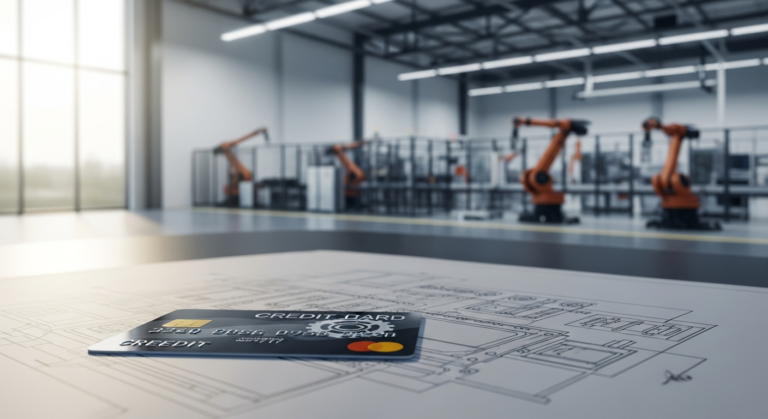
Think of a business line of credit as a heavy-duty credit card for your manufacturing facility, but tied to cash rather than plastic. The lender approves you for a maximum credit limit based on your revenue and credit history. You can transfer cash from this credit line directly into your business checking account at a moment’s notice.
This is the ultimate tool for smoothing out cash flow volatility. If a vital piece of equipment breaks down, or you need to bulk-buy raw materials to fulfill a surprise order, the line of credit is there. As you pay back the principal, those funds become immediately available to borrow again.
Pros of Business Lines of Credit:
- Unmatched flexibility: You have immediate access to cash for unexpected expenses, payroll shortages, or emergency repairs.
- Cost-efficient borrowing: You only pay interest on the exact amount of funds you have actively drawn, not the entire credit limit.
- Ideal for seasonality: It is the perfect tool for managing the natural inventory swings and seasonal dips inherent in manufacturing.
- Builds credit history: Consistently drawing and repaying your line of credit is an excellent way to build your commercial credit profile.
Cons of Business Lines of Credit:
- Variable interest rates: Rates are typically variable and tied to the prime rate, meaning your cost of borrowing can increase over time.
- Lower borrowing limits: Credit limits are generally much smaller than what you could secure through a traditional bank term loan or SBA loan.
- Hidden costs: Many lenders charge annual maintenance fees, draw fees, or inactivity fees just to keep the credit line open.
How to Choose the Right Financing for Your Facility
Selecting the best manufacturing business financing option requires a careful analysis of your current situation and future goals. There is no one-size-fits-all answer. Making the wrong choice can lead to suffocating debt or missed growth opportunities.
To make the best decision, manufacturers should utilize a basic framework. First, assess the urgency of your cash needs. If a machine breaks down and production is halted, you cannot wait three months for an SBA loan; you need equipment financing or a line of credit.
Second, calculate the true cost of capital by looking at the Annual Percentage Rate (APR), which includes both interest and fees. Finally, always align the loan term with the intended use of the funds. You should never finance short-term needs (like weekly payroll) with a 10-year term loan. Nor should you finance a 20-year piece of heavy machinery with a short-term, high-interest advance.
Frequently Asked Questions (FAQ)
Navigating commercial finance can be overwhelming. Manufacturing owners often have specific concerns regarding their eligibility and how these financial products will impact their company’s valuation. Here are a few of the most common questions regarding manufacturing finance.
What are the best manufacturing business financing options for startups?
Atomic Definition: Startup financing refers to accessible capital options, like microloans or equipment financing, that do not require years of proven revenue.
Traditional term loans and SBA loans generally require at least two years of operating history and proven profitability. For a new manufacturing startup, these doors are usually closed. Therefore, startups must rely on alternative funding methods to get their production lines moving.
Equipment financing is highly recommended for startups because the machinery acts as collateral, mitigating the lender’s risk. Additionally, SBA microloans or business credit cards can provide smaller amounts of initial working capital. Once the startup begins generating B2B sales, invoice factoring becomes an excellent way to accelerate cash flow.
Can I secure equipment financing if my manufacturing business has bad credit?
Atomic Definition: Bad credit equipment financing is a subprime loan structure. Lenders approve machinery purchases for riskier borrowers by requiring heavier collateral or larger down payments.
Yes, securing equipment financing with less-than-stellar credit is entirely possible. Because the physical equipment serves as hard collateral for the loan, the lender has a guaranteed way to recoup their losses if you default. This makes equipment loans much more accessible than unsecured lines of credit or term loans.
However, having bad credit will change the terms of your agreement. Subprime borrowers should expect to face significantly higher interest rates. Furthermore, the lender will likely require a much larger down payment—sometimes up to 30% or 40%—to offset its risk before they agree to fund the machinery.
How do these manufacturing financing options affect my balance sheet?
Atomic Definition: Balance sheet impact refers to how a financing method alters a company’s recorded assets, liabilities, and overall debt-to-equity ratio.
It is crucial to understand that not all funding is created equal in the eyes of an accountant. Options like traditional bank term loans, SBA loans, and drawn lines of credit are considered debt. They will immediately increase your company’s liabilities, which alters your debt-to-income ratio. Consequently, they can impact your ability to secure future borrowing.
Conversely, non-debt options like invoice factoring are treated entirely differently. Because factoring is the sale of an asset (your accounts receivable), it does not create a liability on your balance sheet. It simply converts one asset category (unpaid invoices) into another (liquid cash), preserving your company’s pristine debt profile for future institutional borrowing.