Prototype Manufacturing to Full-Scale Production
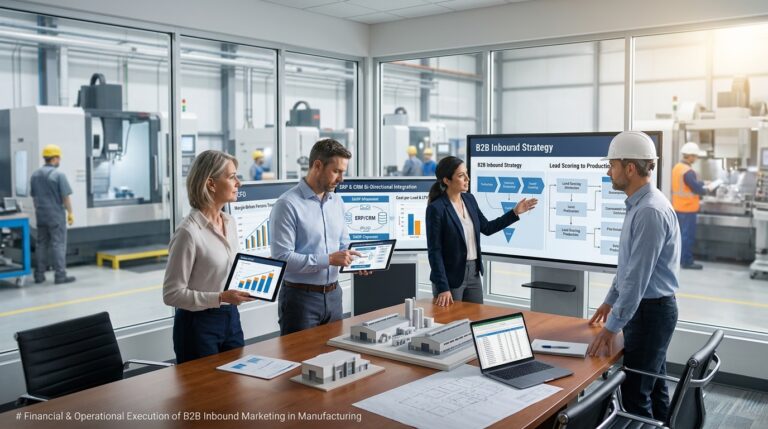
Prototype manufacturing must involve the finance team to reduce business risk. For a financial controller, the shift from prototype to full-scale production creates concentrated exposure to margin erosion, weak controls over tooling capitalization, and standard costing models that are not proven before volume increases. A controlled transition also limits unfavorable material yield variances and excess…
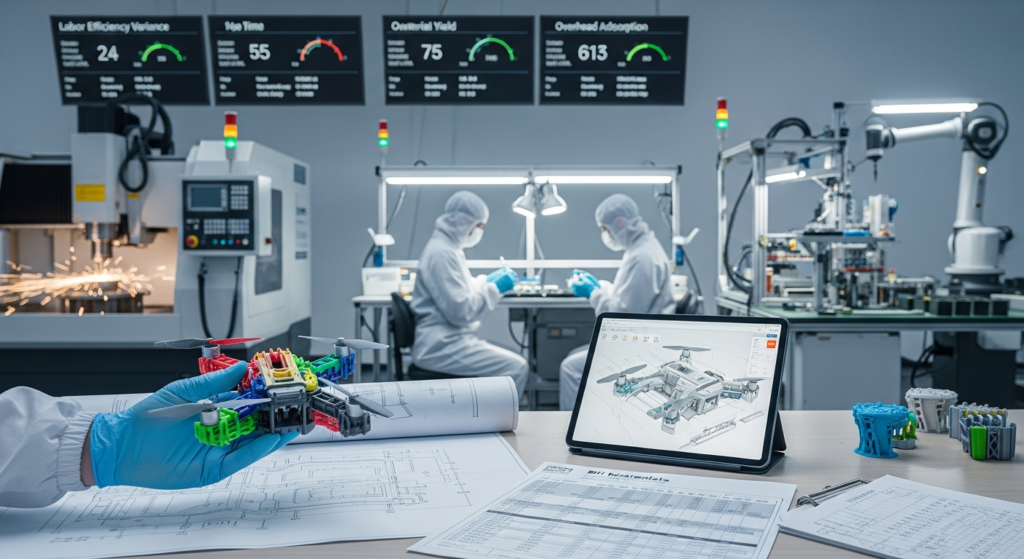
Prototype manufacturing must involve the finance team to reduce business risk. For a financial controller, the shift from prototype to full-scale production creates concentrated exposure to margin erosion, weak controls over tooling capitalization, and standard costing models that are not proven before volume increases. A controlled transition also limits unfavorable material yield variances and excess and obsolete (E&O) inventory while supporting overhead absorption targets once the factory floor takes over.
Prerequisites for the Prototype Manufacturing Process
A Validated Product Concept and CAD Designs
Before incurring any prototyping costs, the engineering concept must be translated into quantifiable data.
- Detailed 3D CAD Files: These govern the dimensional tolerances that drive CNC machining time and material usage.
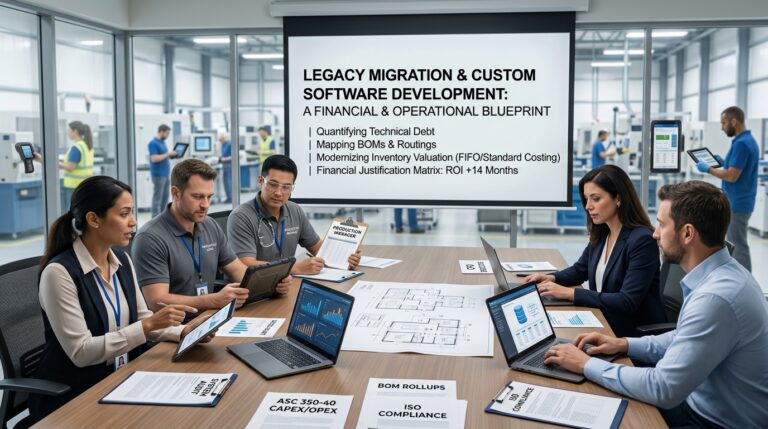
- Comprehensive Bill of Materials (BOM): The transition from an Engineering BOM (eBOM) to a Manufacturing BOM (mBOM) is a key internal control. Finance must perform preliminary BOM rollups at estimated standard costs to ensure the target gross margin is viable before committing capital.
Initial Capital and Budget Allocation
R&D and prototype development require strict budget ring-fencing to protect working capital.
- Funding Segregation: Allocate specific CAPEX for tooling and OPEX for engineering and functional testing.
- Iteration Contingency: Financial models (integrated P&L, Balance Sheet, and 3-way Cash Flow forecasts) must include a 15–20% contingency line item for design iterations. Shortcut: Classify early-stage prototyping strictly as R&D expense to maximize potential R&D tax credits before the project reaches technological feasibility and requires capitalization.
The Right Manufacturing Partner
Using external production facilities or offshore components requires documented supplier vetting.
- Expertise Sourcing: For product categories like aluminum casting or complex fabric knitting, source suppliers with documented cycle times and scrap rates.
- Contracting & IP: Establish Non-Disclosure Agreements (NDAs). Also negotiate supplier payment terms that protect the cash conversion cycle, such as moving from 30% advance/70% upon shipment to Net 60 days post-receipt.
Step 1: Prototype Manufacturing
Defining the Purpose of Your Prototype
Every physical build must have a financial or operational justification to prevent scope creep.
- Proof-of-Concept vs. Visual: Low-cost builds to validate physical geometry. Handled as period expenses.
- Functional vs. Pre-Production: High-fidelity builds testing mechanical tolerances and manufacturability. Benchmarks must be set for labor routing times and material yields.
Selecting the Right Prototyping Method
The chosen method affects short-term cash burn.
- 3D Printing (SLA, FDM, SLS): Lowest upfront fixed cost; strictly variable cost per unit. Ideal for the first 1-3 iterations.
- CNC Machining: Higher variable cost per unit but utilizes production-grade materials to validate material stress limits.
- Prototype Injection Molding (Rapid Tooling): Requires minimal capital investment, such as soft aluminum tools instead of P20 steel, to test near-final material flow and cooling times.
Creating the Initial Iteration
- The Physical Build: Build the first units to the approved CAD and BOM.
- Documentation: Industrial engineers and cost accountants must document the manufacturing process to identify early labor inefficiencies and unfavorable setup time variances.
Step 2: Testing, Refinement, and Design for Prototype Manufacturing (DFM)
Conducting Functional Testing
- Stress & Environmental Testing: Destructive testing quantifies the potential warranty liability reserve required on the balance sheet.
- Compliance (CE, FCC, RoHS): Compliance failures can require redesign, retesting, and scrapping nonconforming prototypes. Experience Note: Documenting these compliance modifications meticulously once yielded a $750K tax credit for a manufacturing entity under an export product development initiative.
Gathering Feedback and Iterating
- Stakeholder & Beta Testing: Early field failure data informs necessary CAD adjustments.
- ERP Version Control: Every CAD adjustment must trigger a BOM revision in the ERP system to prevent purchasing from procuring obsolete componentry.
Design for Manufacturing (DFM)
DFM is where engineering changes reduce the standard cost before production volume locks in.
- Assembly Optimization: Reducing fastener counts or combining parts lowers direct labor routing times and improves labor efficiency variances.
- Tooling Preparation: Finalize steel mold designs and build the depreciation or amortization schedules around expected unit volumes.
Step 3: Scaling to Full-Scale Production
Discrete Manufacturing Scenario: The Pilot Run
Context: A $30M discrete manufacturer launching a new line of commercial lawnmowers.
- Low-Volume Production (Pilot Run): We initiated a 150-unit pilot run to validate the standard cost model rather than generate profit.
- Financial Impact Matrix – Pilot Run:
- Target Standard Labor: 4.2 hours/unit.
- Actual Pilot Labor: 5.8 hours/unit (Unfavorable labor efficiency variance).
- Root Cause: Sub-assembly bottlenecks on the aluminum casting deck.
- Action: Re-balanced the assembly line and updated standard costs before volume scaling, preventing a projected $120,000 annualized gross margin leakage.
Implementing Quality Control and Assurance Protocols
- AQL Standards: Establish Acceptable Quality Limits to model expected scrap rates into the standard cost of goods sold (COGS).
- EOL Testing: End-of-line testing jigs require upfront CAPEX but can reduce the Cost of Poor Quality (COPQ) and downstream warranty claims.
Launching High-Volume Mass Production
- Continuous Operations: Switch standard costing from a theoretical baseline to a strict variance-tracking mechanism. Implement daily cycle counting controls to eliminate the need for annual wall-to-wall stocktakes.
- Logistics & Month-End: Integrate warehouse management scanning to ensure real-time inventory relief. That control supports a 5-day month-end close by removing manual WIP reconciliation.
Common Mistakes to Avoid During the Production Lifecycle
Skipping the Design for Manufacturing (DFM) Process
Designing a visually appealing product that cannot be assembled efficiently destroys margins. In a window-covering manufacturing business, bypassing DFM resulted in a 20% increase in direct labor time per unit. The result was severe overhead under-absorption and a price increase that cost us market share.
Rushing Through Prototype Manufacturing Iterations
Moving to expensive production tooling before the pre-production prototype is fully debugged is a common capital allocation error. If a $60,000 injection mold requires significant post-machining due to a late design change, the resulting modification costs hit the P&L immediately, bypassing capitalization rules.
Underestimating Tooling Costs and Timelines
Failing to account for the 10–14 week lead time for custom fixtures and steel molds disrupts the cash flow forecast. CFOs must ensure working capital is sufficient to cover fixed overhead during this non-revenue-generating waiting period.
Frequently Asked Questions (FAQs)
How long does prototype manufacturing usually take?
From a project finance perspective, prototyping spans 3 to 9 months. Visual models produced by 3D printing can be completed in days with minimal cash impact, whereas functional CNC and rapid tooling iterations usually take 4–8 weeks per cycle. Budget for at least three full iteration cycles in your cash runway.
What is the difference between a functional prototype and a pre-production prototype?
A functional prototype confirms mechanical viability: whether the product works. A pre-production prototype confirms manufacturing viability, including whether it can be built at the target standard cost. Pre-production prototypes use final materials, actual labor routings, and trial tooling to validate the mBOM.
When should I transition from prototyping to full-scale production?
Transitioning is authorized only when the pre-production build achieves a 95%+ pass rate on quality testing, the BOM cost is locked within 2% of the target standard cost, and working capital is secured to fund the initial raw material purchase orders under negotiated supplier terms.