Robotics in Manufacturing: Automate With Zero Downtime
Integrating robotics into a manufacturing facility is, in practice, a capital allocation and risk management exercise tied directly to workflow design. If planned and commissioned well, factory automation can shorten cycle times, improve labor efficiency variances, and lower standard costs. Deploying capital equipment on an active shop floor still creates the risk of unabsorbed fixed…
Integrating robotics into a manufacturing facility is, in practice, a capital allocation and risk management exercise tied directly to workflow design. If planned and commissioned well, factory automation can shorten cycle times, improve labor efficiency variances, and lower standard costs. Deploying capital equipment on an active shop floor still creates the risk of unabsorbed fixed overhead if production halts.
This guide sets out the controls required to automate a production line without disrupting throughput. The methods below are based on practical work in discrete manufacturing, specifically rationalizing operations and deploying automation across a $40M turnover lawnmower and woodfire manufacturing business.
Scenario Context: Discrete Manufacturer (Lawnmower Assembly)
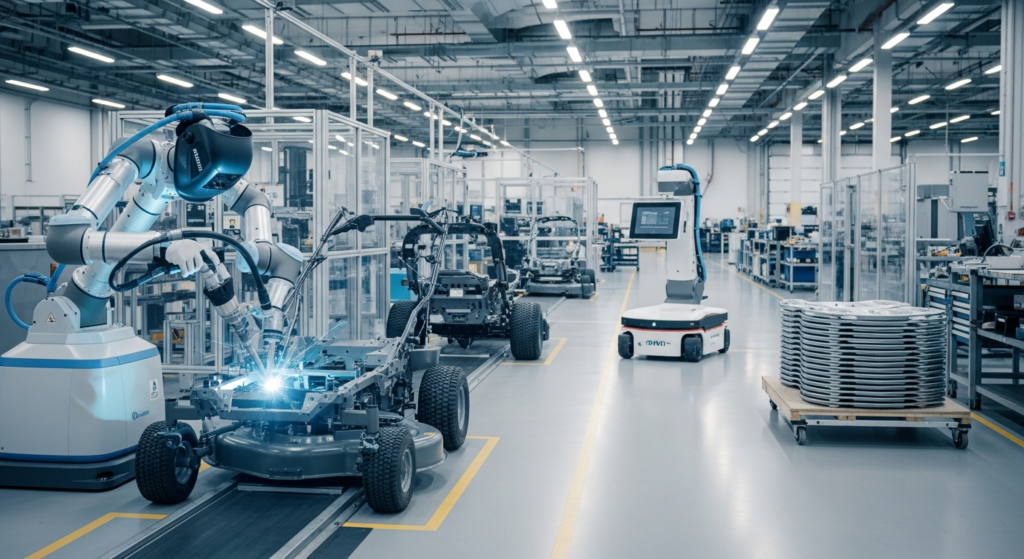
The Objective: Automate chassis welding and material transport using AMRs to resolve a chassis welding bottleneck.
The Constraints: The plant runs a single daily shift generating $150K in finished goods. Any halt to the line creates an immediate unfavorable volume variance and threatens outbound wholesale shipments.
Financial Target: Achieve a 24-month payback period and reduce direct labor costs in the chassis routing by 35%, resetting standard costs for the next fiscal year.
Step 1: What You Need (Prerequisites for Automation)
Before procurement starts or RFPs go out, the finance and operations teams must establish a baseline to measure post-integration ROI and control capital outflows.
Workflow Audit
- Action: Extract standard vs. actual cycle times from the ERP for the targeted routing operations. Analyze existing labor efficiency variances.
- Accounting Impact: You cannot accurately forecast payback without knowing the baseline cost of manual production. Conduct time-and-motion studies to quantify current manual interventions.
Defined Automation Goals and KPIs (Key Performance Indicators)
- Action: Establish strict hurdle rates for the project, such as a minimum 15% IRR. Focus KPIs on Overall Equipment Effectiveness (OEE), reduction in scrap material (direct materials variance), and direct labor hours per unit.
Stakeholder and Workforce Buy-In
- Action: Get agreement from the production manager, maintenance engineers, and finance. Reallocate displaced direct labor to upstream sub-assembly to prevent severance OPEX and retain institutional knowledge.
Planned Budget Allocation (Hardware, Integration, and Training)
- Action: Build a Total Cost of Ownership (TCO) model. Capitalize the hardware, freight, and initial integration engineering. Expense the training and ongoing software licenses in the period incurred.
- Practical Step: Use forward FX contracts to lock in the exchange rate for imported robotic hardware, such as from Japan or Germany, to protect the CAPEX budget from currency fluctuations during the 6-month lead time.
Step 2: Planning and Process Mapping
Design the deployment around the plant’s existing floor space, workflows, and budget constraints.
Identifying the Bottlenecks (Where Robotics Make Sense)
- Deploy the Theory of Constraints (TOC). Automating a non-constraint process may do little more than generate excess Work-In-Progress (WIP) inventory, trapping working capital. Target the specific routing step that limits factory throughput.
Choosing Between Cobots and Traditional Industrial Robots
- Industrial Robots: High speed and payload, but require expensive safety cages. That consumes square footage and increases the overhead allocation per square foot for the department.
- Collaborative Robots (Cobots): Slower, but require minimal guarding. They can be deployed directly beside humans, preserving the existing floor layout and minimizing integration CAPEX.
Mapping the Digital Twin (Simulating the Process Safely)
- Action: Use 3D simulation software to create a digital twin of the targeted work cell.
- Financial Benefit: Validates the expected throughput increase before issuing a Purchase Order. This data helps defend the CAPEX request to the Board or external lenders.
Designing the Floor Layout for Safe Human-Machine Interaction
- Action: Re-route material staging areas. Ensure AMRs (Autonomous Mobile Robots) have clear travel lanes that do not intersect with forklift traffic. Efficient layout reduces WIP staging requirements, improving inventory turns.
Step 3: Phased Integration and Deployment
To protect the daily $150K throughput, integration must be executed in segmented, controlled phases.
Launching a Pilot Program During Off-Peak Hours
- Action: Install and calibrate the robotics during weekends or the 3rd shift.
- Workflow Control: Keep commissioning to non-production hours; otherwise, machine downtime can create unabsorbed overhead.
Shadow Testing (Running Robotics Parallel to Manual Operations)
- Action: Run the automated cell offline to produce a limited batch of sub-assemblies while the main production flow remains on the legacy manual cell.
- Audit Control: Implement strict cycle counting controls on the shadow testing cell. Do not allow shadow-produced WIP to automatically backflush components from inventory until QA verifies the tolerances.
Synchronizing Software and PLCs (Programmable Logic Controllers)
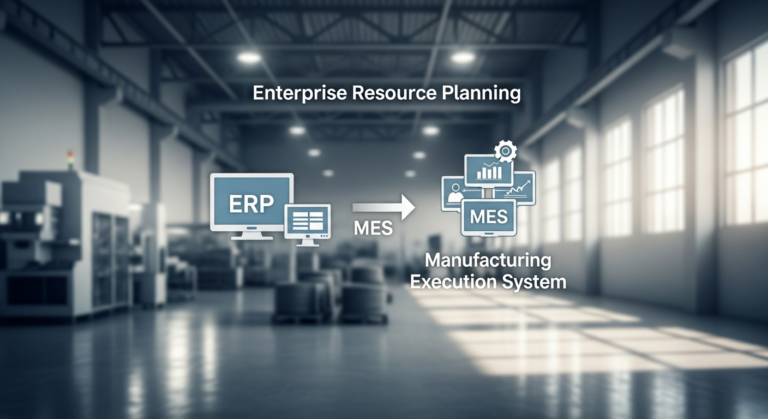
- Action: Integrate the robotic PLCs with your ERP/MRP system.
- Accounting Impact: Configure the system to automatically trigger BOM (Bill of Materials) relief and backflush direct materials upon the robotic cell completing a cycle. This keeps perpetual inventory current and removes delayed manual data entry.
Gradual Scaling and Workforce Handover
- Action: Shift 25% of volume to the robotic cell, then 50%, then 100% over a 4-week period. Monitor scrap rates daily.
Step 4: Common Mistakes to Avoid
- Automating an Inefficient Process (Failing to Optimize First): Automating a poorly designed routing simply produces scrap at a faster rate. Lean out the physical process before applying CAPEX.
- Underestimating Integration Downtime and Transition Periods: Do not plan for a “flip-the-switch” deployment. If inventory is not buffered before deployment, stockouts and missed outbound shipments become likely. Build a 2-week strategic safety stock of the affected sub-assembly prior to commissioning.
- Neglecting Employee Safety Protocols and Reskilling: Do not treat labor only as a variable cost to eliminate. In a discrete manufacturing environment, cross-training displaced welders into quality control or machine programming limits hiring costs and keeps the handover less disruptive on the shop floor.