Track Scrap and Rework Costs: A Step-by-Step Guide
How to Accurately Track Scrap and Rework Costs: A Step-by-Step Manufacturing Guide In manufacturing, ignoring your production losses is a recipe for shrinking profit margins. Two of the biggest culprits eating away at your bottom line are scrap and rework. Scrap refers to defective materials or products that cannot be repaired and must be permanently…

How to Accurately Track Scrap and Rework Costs: A Step-by-Step Manufacturing Guide
In manufacturing, ignoring your production losses is a recipe for shrinking profit margins. Two of the biggest culprits eating away at your bottom line are scrap and rework. Scrap refers to defective materials or products that cannot be repaired and must be permanently discarded. Rework refers to defective products that require additional labor and materials to meet quality standards before they can be sold.
Failing to properly track these two crucial metrics leads to inflated production expenses and hides massive operational inefficiencies. When you don’t measure your losses, you simply cannot manage or improve them.
Fortunately, getting a handle on these costs is entirely within your control. This step-by-step guide will walk you through exactly how to establish a reliable tracking system for scrap and rework. By the end, you will know how to turn invisible losses into actionable data for continuous operational improvement.
What You Need to Get Started
Before you can effectively track scrap and rework on the shop floor, you need to build a solid foundation. Gathering the right tools, data, and personnel is essential for an accurate tracking system.
Standardized Costing Data
To measure financial loss accurately, you must first have an iron-clad understanding of your baseline costs. You cannot quantify what you lost if you do not know what it cost to build in the first place.
Make sure your production baseline includes up-to-date Bills of Materials (BOM) and standard routing times for labor. A Bill of Materials (BOM) is a comprehensive inventory of raw materials, components, and sub-assemblies required to manufacture a final product. Having accurate BOMs and labor rates ensures your financial calculations will be spot-on.
Data Collection Hardware
Tracking scrap and rework requires making data entry as frictionless as possible for your floor operators. If the process is cumbersome, your team will simply skip it.
Ensure your shop floor is equipped with easily accessible data entry points. Consider implementing the following hardware:
- Wireless barcode scanners for quick material logging.
- Ruggedized tablets mounted directly at workstations.
- Centralized touchscreen terminals for machine cells.
Manufacturing Execution System (MES) or ERP
Manual calculations will eventually break down as your operation scales. You need a centralized system to handle the complex math of production losses.
A robust software system is necessary to automatically aggregate material losses, labor hours, and overhead into comprehensive financial reports. An ERP (Enterprise Resource Planning) system is an integrated software platform used to manage and automate core business processes, including manufacturing operations. With an ERP or MES in place, raw floor data instantly transforms into readable financial insights.
A Cross-Functional Tracking Team
Technology alone will not solve your tracking problems. You need dedicated human oversight to ensure the system is utilized correctly.
Designate a cross-functional tracking team to oversee the implementation and continuous auditing of the tracking process. This team should ideally include:
- Quality Assurance Managers: To define what constitutes a defect.
- Floor Supervisors: To enforce daily reporting habits among operators.
- Cost Accountants: To verify the financial accuracy of the tracked data.
Step 1: Define Categories and Establish Reason Codes
A successful tracking system relies on clarity and structure. Your team must know exactly how to categorize a defect the moment it happens.
Separate Scrap from Rework
The most fundamental rule of tracking is keeping scrap and rework in separate data buckets. They impact your bottom line in entirely different ways.
Create distinct, separate workflows for handling scrap and rework in your system. Scrap requires tracking the financial value of the discarded material and the labor spent before it was ruined. Rework, on the other hand, requires tracking the additional labor, machine time, and replacement materials needed to salvage the product.
Develop Specific Reason Codes
To stop defects from happening, you have to know exactly why they occurred. Generic labels like “defective” or “broken” are useless for process improvement.
Reason codes are specific alphanumeric tags used to categorize the exact root cause of a production defect. Move away from vague descriptions and create a standardized list of highly specific codes.
Effective reason codes might include:
- M-01: Machine Calibration Error
- O-03: Operator Assembly Error
- R-12: Substandard Raw Material
- D-05: Engineering Design Flaw
Standardize the Reporting Protocol
Once your codes are established, your team needs instructions on how to use them. Inconsistency in reporting will immediately corrupt your data.
Write clear Standard Operating Procedures (SOPs) detailing exactly when and how floor workers should log a scrap or rework event. A Standard Operating Procedure (SOP) is a documented set of step-by-step instructions designed to help workers carry out routine operations consistently. Train your staff thoroughly on these SOPs so reporting becomes a second-nature habit.
Step 2: Capture Data and Calculate True Financial Impact
With your categories and hardware in place, it is time to start collecting live data. This step transforms physical defects into real financial figures.
Log Real-Time Shop Floor Data
Data is most accurate the second a defect is discovered. If you rely on end-of-shift memories or paper notes, vital information will be lost.
Require operators to scan or manually enter your established reason codes the moment a defect is identified. Delaying data entry leads to forgotten metrics, missed steps, and wildly inaccurate batch costing. Real-time logging guarantees your management team is always looking at the true state of the production floor.
Calculate Direct Material and Labor Costs
Once the data is in the system, you can calculate your direct losses. This requires simple but vital mathematical formulas.
To successfully track scrap costs, multiply the discarded raw material by its per-unit cost on the BOM. To track rework costs, multiply the extra hours spent fixing the product by your standard labor rate. Finally, add the cost of any new components used during the repair to find your total direct rework cost.
Factor in Overhead and Opportunity Costs
Direct materials and labor only tell half the story. The true financial impact of scrap and rework runs much deeper into your operational budget.
You must apply your standard factory overhead rate to the extra machine time used for rework. Furthermore, you must calculate the opportunity cost of the defect. Opportunity cost is the potential revenue lost when machinery and labor are used to fix defective items instead of producing new, profitable products.
Factoring in these hidden costs often reveals that rework is far more expensive than management originally assumed.
Step 3: Generating Reports and Achieving the Final Result
Collecting data is only useful if you analyze it. The final step is turning your raw numbers into actionable business intelligence.
Build Visual Dashboards
Spreadsheets full of numbers are difficult to digest quickly. Visual representations of data help teams spot trends at a glance.
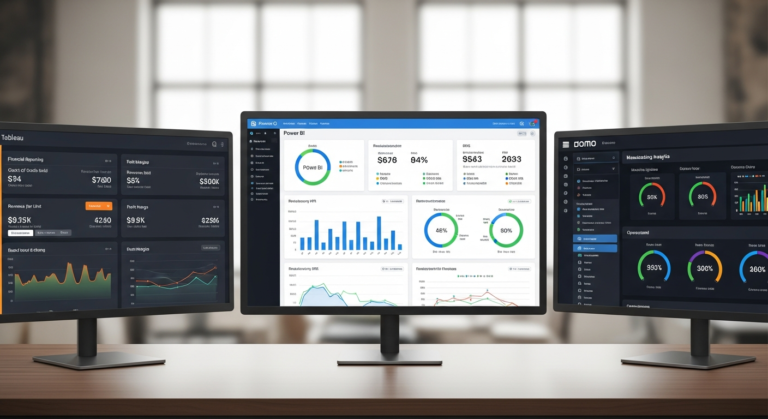
Configure your ERP or reporting software to display daily, weekly, and monthly scrap and rework trends. Use Pareto charts to visualize your biggest operational leaks. A Pareto chart is a bar graph where individual values are represented in descending order, helping teams easily identify the most significant factors in a dataset. This will highlight the top 20% of reason codes causing 80% of your financial costs.
Conduct Root Cause Analysis (RCA)
Once your dashboards highlight the biggest issues, your team must investigate them. Do not just accept the losses—actively solve them.
Hold weekly cross-functional meetings with your tracking team to review the reports. Root Cause Analysis (RCA) is a systematic problem-solving process used to identify the fundamental origin of a defect or failure. Use RCA techniques like the “5 Whys” to trace your most expensive, frequently occurring defects back to their ultimate origin point.
The Final Result: A Continuous Improvement Loop
The goal of tracking scrap and rework is not just accounting; it is evolution. The ultimate reward is building a more efficient, profitable factory.
The final result of this process is a closed-loop system where tracked data actively dictates company decisions. You will use these insights to dictate process engineering updates, machinery maintenance schedules, and targeted employee training programs. Over time, this continuous improvement loop will drive your scrap and rework costs down to industry benchmark minimums.
Common Mistakes to Avoid
Even with a solid plan, many manufacturers stumble when launching a tracking initiative. Watch out for these common pitfalls that can derail your progress.
Lumping Scrap and Rework Costs Together
As mentioned earlier, treating scrap and rework as the same metric is a critical error. Combining these two metrics obscures exactly where your money is bleeding on the floor.
Rework is primarily a labor and capacity loss, meaning it eats up your time and scheduling. Scrap, conversely, is primarily a material loss that hits your purchasing budget. Keep them separated to understand exactly which part of your business needs intervention.
Creating a Punitive Culture
The fastest way to destroy your tracking system is to punish the people providing the data. If operators believe they will be reprimanded for logging scrap, they will simply hide the defective parts.
Foster a culture of psychological safety on the production floor. Make it abundantly clear that reporting is viewed as a necessary tool for process improvement, not a metric for employee discipline. Celebrate operators who accurately report defects, as they are helping the company save money in the long run.
Ignoring Administrative Costs
When calculating the cost of a defect, companies often focus only on the shop floor. This ignores the massive ripple effect defects have on the front office.
Many manufacturers completely forget to track the administrative time spent dealing with scrap and rework. Be sure to account for:
- Production planners having to reschedule disrupted manufacturing runs.
- Quality engineers taking time to reinspect salvaged and reworked parts.
- Purchasing agents spending hours expediting replacement raw materials.
Frequently Asked Questions
What is a good benchmark percentage for scrap and rework?
While acceptable loss varies heavily by industry and product complexity, there is a recognized standard for excellence. World-class manufacturing organizations typically aim to keep total scrap and rework costs below 1% to 2% of their total sales. If your metrics are hovering above 5%, you have significant room for immediate profitability improvement.
Can small manufacturers track scrap and rework costs without an expensive ERP?
Yes, absolutely. While an ERP dramatically automates and streamlines the process, small operations can easily start with manual methods. Begin by using standardized paper logs at workstations to capture reason codes and wasted time. A designated team member can then transfer these logs into a dedicated spreadsheet to perform the standard cost calculations.
How often should management review scrap and rework reports?
Review cadences should be tailored to the specific role of the manager. High-level financial impacts and macro-trends should be reviewed by executives on a monthly basis. However, floor supervisors and quality managers should review tracking dashboards daily or weekly. This frequent review cycle allows them to catch miscalibrated machines or bad material batches before they ruin an entire week’s worth of production.