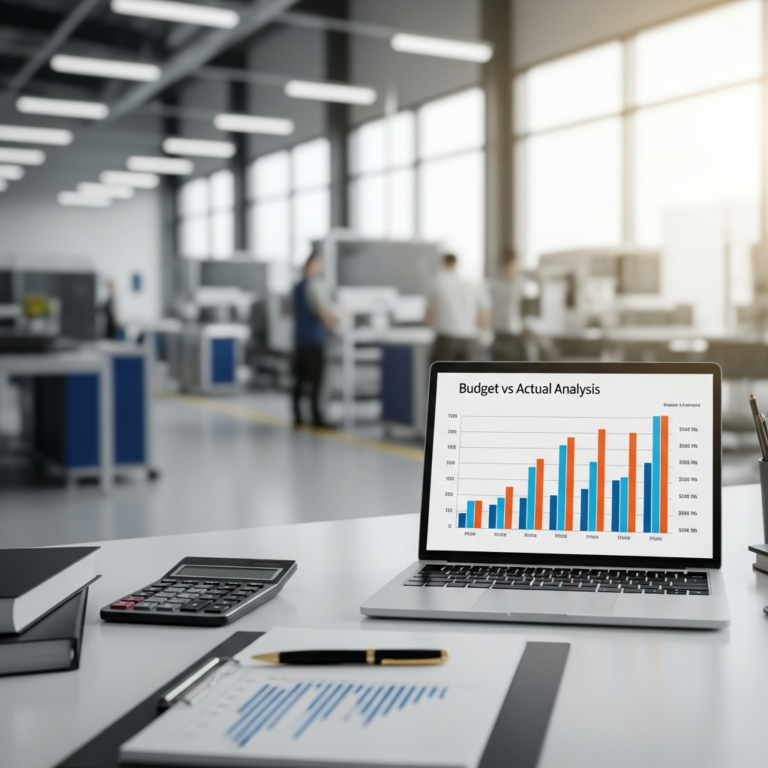
Top ERP Systems with Financial Reporting for Manufacturing
Top Manufacturing ERP Systems with Advanced Financial Reporting Atomic Definition: A unified manufacturing ERP (Enterprise Resource Planning) system is a comprehensive software platform that seamlessly connects shop-floor production data directly with financial accounting processes in real time. Running your operations on fragmented software is a recipe for disaster. Many growing manufacturers attempt to string together…
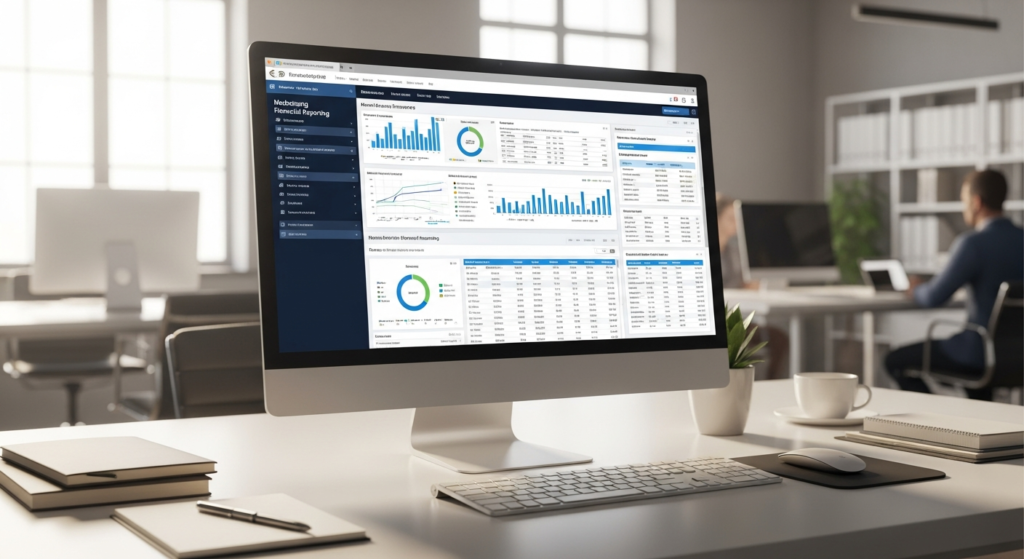
Top Manufacturing ERP Systems with Advanced Financial Reporting
Atomic Definition: A unified manufacturing ERP (Enterprise Resource Planning) system is a comprehensive software platform that seamlessly connects shop-floor production data directly with financial accounting processes in real time.
Running your operations on fragmented software is a recipe for disaster. Many growing manufacturers attempt to string together basic accounting software with separate production spreadsheets. This disconnected approach inevitably leads to inaccurate key performance indicators (KPIs), poor job costing, and ultimately, lost profit margins.
When your production and finance teams are looking at two entirely different sets of data, making agile business decisions becomes impossible. You cannot fix margin leaks if you cannot see them happening on the factory floor.
Upgrading to a dedicated ERP with financial reporting for manufacturing capabilities is not just an IT expense. It is a high-ROI investment that transforms your operational data into a strategic asset. By the end of this guide, you will have the knowledge you need to confidently evaluate, select, and purchase a system that drives sustainable profitability.
Top Manufacturing Software Reviewed
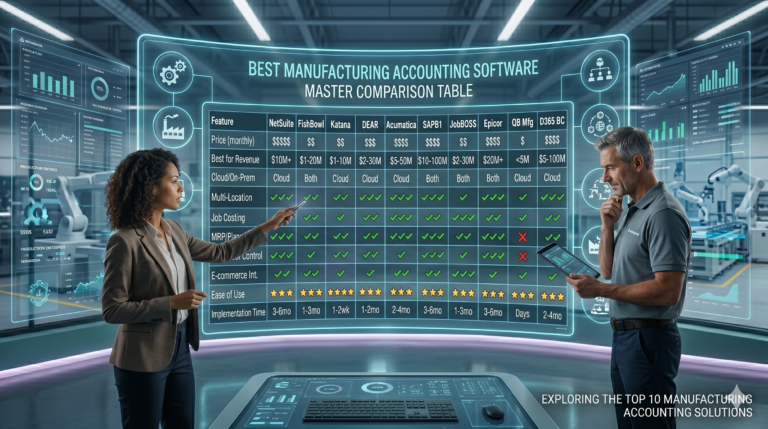
Choosing the right software requires cutting through the marketing noise to understand how the platform actually performs in the real world. Below, we detail the market leaders to help buyers objectively compare features, costs, and capabilities.
Oracle NetSuite for Manufacturing
Oracle NetSuite is a dominant player in the cloud software space, offering a robust suite of tools tailored for complex manufacturing environments. It is renowned for its ability to merge high-level financial oversight with granular supply chain management.
Pros and Cons:
- Pros: Exceptional cloud accessibility allows you to manage operations from anywhere. It features highly customizable financial reporting and real-time KPI dashboards that update the moment a transaction occurs.
- Cons: The platform’s vast capabilities mean it can be overwhelming to implement without an experienced partner. It also sits in a premium pricing tier, which may stretch the budgets of smaller operations.
Value for Money:
NetSuite requires a high initial investment, but it offers massive long-term value. By consolidating your IT infrastructure into a single, cloud-based platform, you eliminate server maintenance and reduce internal IT costs. Furthermore, its rapid scalability means you can add new users, locations, or subsidiaries without purchasing new hardware.
Who This Is For:
This system is purpose-built for mid-market to enterprise-level manufacturers. It is the ideal choice for companies planning rapid growth, future acquisitions, or multi-entity global operations requiring complex currency conversions.
Epicor Kinetic
Epicor Kinetic is a powerhouse software built from the ground up specifically for the manufacturing sector. Unlike generic software adapted for factory use, Epicor natively speaks the language of the shop floor.
Pros and Cons:
- Pros: Built specifically for manufacturing with incredibly deep job costing, material requirements planning (MRP), and advanced inventory valuation features.
- Cons: Because it is so feature-heavy, the user interface can feel complex at first glance. There is often a steeper learning curve for non-technical accounting staff transitioning from simpler systems.
Value for Money:
Epicor delivers an excellent return on investment for businesses that require heavy factory-floor integration. When you factor in the cost of replacing multiple legacy systems, such as separate MES, quality control, and accounting apps, the per-user cost makes perfect financial sense.
Who This Is For:
Epicor Kinetic shines for make-to-order (MTO) and engineer-to-order (ETO) manufacturers. If your business produces highly customized products and you need granular visibility into fluctuating production costs, this is the software for you.
SYSPRO
SYSPRO is an industry favorite that balances robust manufacturing capabilities with user-friendly financial management. It is designed to simplify complex supply chains while maintaining strict financial oversight.
Pros and Cons:
- Pros: It boasts outstanding cost-control modules, strong end-to-end traceability, and highly flexible deployment options (available both in the cloud and on-premise).
- Cons: While its core manufacturing and accounting features are stellar, third-party integrations are sometimes required for advanced HR or CRM functions outside of the core platform.
Value for Money:
SYSPRO offers one of the most competitive pricing models in the mid-market space. Their highly transparent licensing approach delivers strong value for money, ensuring you pay only for the modules you actually need.
Who This Is For:
This platform is an excellent fit for process and discrete manufacturers. It is highly recommended for organizations focused on strict inventory valuation, regulatory compliance, and tight cost controls on the production floor.
Buyer’s Guide: Choosing an ERP with Financial Reporting Manufacturing
Purchasing enterprise software is one of the most critical decisions your leadership team will make. You need an objective framework to help evaluate software based on your specific operational needs, rather than flashy sales demos.
Must-Have Manufacturing KPIs & Dashboards
Atomic Definition: A Key Performance Indicator (KPI) is a measurable value that demonstrates how effectively a company is achieving key business objectives.
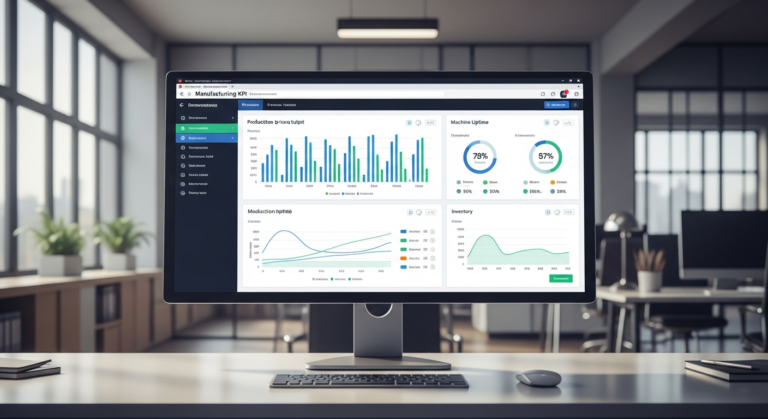
Your new ERP must eliminate the need for manual data crunching at month-end. It should automatically track and display critical financial metrics on intuitive, role-based dashboards. Look for software that effortlessly handles the following:
- Standard vs. Actual Costing: The system must automatically highlight variances between what a product should cost to make and what it actually costs in real-time.
- Overhead Allocation: Ensure the software can accurately distribute indirect costs (like factory electricity and machine depreciation) to specific jobs or production runs.
- Inventory Turnover: The ERP should track how fast materials are consumed and sold, helping your finance team minimize capital tied up in dead stock.
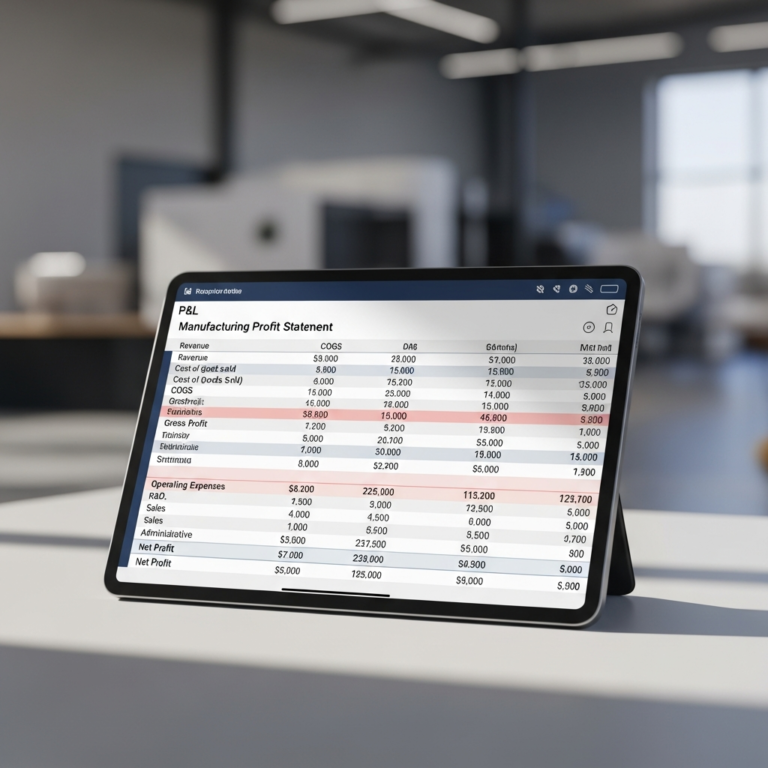
- Gross Margin by Product Line: You need instant visibility into which specific items are driving revenue and which are bleeding profitability.
Assessing Total Cost of Ownership (TCO) vs. Value for Money
Atomic Definition: Total Cost of Ownership (TCO) is the comprehensive financial estimate of the direct and indirect costs of a product over its entire lifecycle.
When evaluating software, you must look beyond the initial sticker price. Falling for a “cheap” licensing fee can cost you millions if the implementation drags on for years. Break down the hidden costs of software purchasing into these specific categories:
- Subscription and Licensing Fees: Understand if you are paying per user, per module, or based on transaction volume.
- Implementation Consulting: Budget for the experts who will configure the software, migrate your historical data, and build your custom financial reports.
- User Training: Your software is only as good as the people using it. Allocate funds to thoroughly train both your shop-floor operators and your finance team.
- Ongoing Technical Support: Factor in the annual cost of software updates, bug fixes, and customer service access.
By calculating these factors over a five to seven-year period, you can determine the actual value of the software. A higher upfront cost often yields a lower TCO if the system works efficiently without constant custom coding.
Implementation and Scalability
A successful software purchase requires you to look 5 to 10 years ahead. You are not just buying a tool for the business you have today; you are buying an infrastructure for the business you intend to become.
Ask yourself if the ERP will seamlessly support new product lines, corporate acquisitions, or international currency conversions. Can it handle a sudden 300% increase in daily transaction volume without crashing?
Buying a highly scalable system prevents a costly, painful software migration later down the road. It ensures that as your manufacturing footprint expands, your financial reporting capabilities effortlessly expand right alongside it.
Frequently Asked Questions (FAQs)
It is completely normal to have hesitations before signing a software contract. Below, we clear up common purchasing concerns to help you move closer to a confident decision.
What is the average ROI timeline for a manufacturing ERP?
Atomic Definition: Return on Investment (ROI) is a financial metric used to evaluate an investment’s profitability relative to its total cost.
For a mid-sized manufacturer, the objective timeline for a full return on your ERP investment is typically 12 to 24 months. This timeline accounts for the implementation period, user adoption, and the stabilization of new processes.
Automated financial reporting drastically accelerates this timeline by catching margin leaks early. When your finance team can instantly spot material waste or inefficient labor hours, they can halt the financial bleeding weeks before the monthly accounting close.
Can I keep my current accounting software and just add a Manufacturing Execution System (MES)?
Technically, yes, but this approach is rarely the most profitable choice. While bolting an MES onto basic accounting software might seem cheaper up front, it creates a fragile IT environment reliant on custom APIs and manual data syncs.
A fully integrated ERP provides significantly better value for money. It eliminates dangerous data silos, destroys the need for manual spreadsheet reconciliation, and ensures a single source of truth across your entire enterprise.
How does an ERP improve manufacturing financial KPIs?
An ERP system bridges the gap between physical production and financial accounting. It does this by capturing real-time data from the shop floor, such as material scanning, machine run times, and labor clock-ins, and feeding it directly into the general ledger.
Because this data transfer is immediate and automated, human error is virtually eliminated. This ensures that your financial KPIs are based on exact actuals, rather than educated guesses or outdated standard costs.
The Verdict: Which System Should You Choose?
Selecting the perfect software ultimately comes down to your company’s unique operational complexity, growth trajectory, and budget. Here is a decisive summary that maps the reviewed software to specific buyer profiles to help you make your purchasing decision.
Best Value for Money: SYSPRO
SYSPRO takes the crown for delivering incredible functionality at a highly accessible price point. Its modular pricing structure ensures you only pay for what you use, while its core manufacturing financial controls remain top-tier.
If you are a mid-sized manufacturer watching your budget but refusing to compromise on inventory traceability and cost control, SYSPRO is the smartest financial choice.
Best for Specialized Manufacturing: Epicor Kinetic
Epicor Kinetic is the undisputed champion for complex production environments. While the learning curve is undeniably steeper, the granular control it gives you over custom production processes is unmatched.
Engineer-to-order and make-to-order manufacturers will see the fastest operational improvements with Epicor. It provides the exact tools needed to ensure highly customized, one-off jobs remain profitable.
Best Overall for Growth and Scalability: Oracle NetSuite
Oracle NetSuite offers an unparalleled combination of cloud flexibility and financial firepower. Its ability to effortlessly manage multiple subsidiaries, complex supply chains, and global financials puts it in a league of its own.
Growing businesses looking to future-proof their operations should invest in NetSuite’s robust financial reporting engine. It is a true enterprise-grade platform that will adapt to whatever your strategic roadmap demands.
Ready to upgrade your operations? Take the immediate next step in your buying journey today. Request a software demo, get a custom pricing quote, or use an online TCO calculator to discover exactly how much an advanced manufacturing ERP can save your business.