Manufacturing Website Design: Turn Traffic Into RFQs
A manufacturing website can affect cost control and revenue when it is built as an RFQ and workflow tool, not just a brochure. Such a site should be treated less as a marketing expense than as a capitalizable digital asset under ASC 350-40 for internal-use software/web development when it functions as an automated pre-sales engineering…

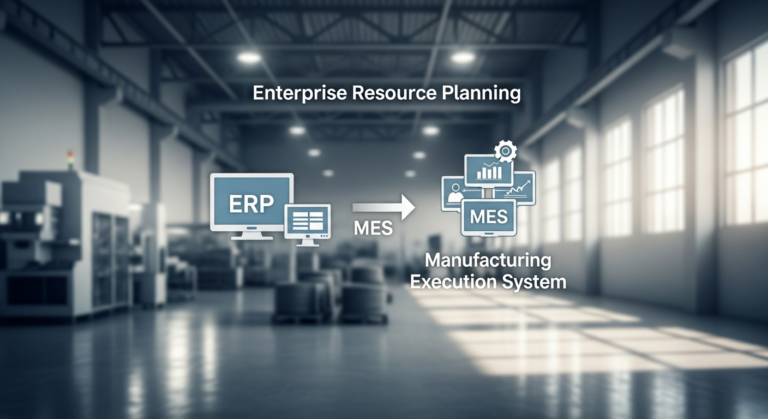
A manufacturing website can affect cost control and revenue when it is built as an RFQ and workflow tool, not just a brochure. Such a site should be treated less as a marketing expense than as a capitalizable digital asset under ASC 350-40 for internal-use software/web development when it functions as an automated pre-sales engineering tool. Properly engineered, it interfaces with your ERP and CRM, standardizes Bill of Materials (BOM) creation, and improves machine hour scheduling by qualifying leads before they consume valuable SG&A overhead. It also tightens Purchase Price Variances (PPV) by creating cleaner handoffs between quoting and purchasing data.
Use the requirements below to design an RFQ-focused manufacturing website that protects gross margins by translating traffic into standardized RFQs and shortening the quote-to-cash cycle.
Essential Manufacturing Website Design Requirements
Defined Target Audience Profiles
The procurement officer and the design engineer drive different financial metrics. Procurement focuses on supplier consolidation, credit terms, and standard pricing, which affects Accounts Receivable (A/R) and Days Sales Outstanding (DSO). Engineers require CAD files and material tolerances. Meeting both needs digitally reduces the payroll burden on your internal sales engineering team and directly lowers Customer Acquisition Cost (CAC).
Accurate Brand and Facility Assets
Authentic visual documentation of your shop floor and physical plant validates capacity. Generic marketing imagery obscures actual capabilities. High-resolution visuals of CNC machining centers, automated knitting looms, or aluminum casting molds establish operational readiness. They also help corporate buyers verify capacity and housekeeping standards before a site visit.
Complete Product and Capability Master Data
Web content must mirror ERP master data. Web catalogs require identical nomenclature to your internal routing and standard costing databases.
- Data Requirements: Material spec sheets, ISO 9001/AS9100 certifications, equipment lists with maximum bed sizes/tonnages, and dimensional tolerances.
- Objective: Prevent the quoting of non-conforming parts that lead to unfavorable labor efficiency variances or excessive scrap/rework costs.
A Secure CMS Architecture
The CMS must integrate securely via API with your ERP/CRM architecture. This allows web-originated RFQs to flow directly into the estimating module for accurate overhead absorption and standard costing calculations before quote issuance.
Step 1: Structuring Architecture and User Navigation
Creating an ERP-Aligned Catalog Hierarchy
Website taxonomy should reflect how your ERP groups materials, routings, and WIP. Organize architecture by material, process, or end-use. The hierarchy should mirror BOM rollups, allowing buyers to drill down to specific components and pre-qualify the technical viability of the RFQ.
Implementing a Mobile-Responsive and Fast-Loading Framework
Industrial buyers use mobile devices directly on the shop floor. A responsive framework also helps internal users access specs away from a desk. Internal plant managers can also use the mobile architecture for rapid reference during cycle counting controls or when cross-referencing supplier technical data against physical receiving inspections.
Showcasing Certifications and Compliance Prominently
Prominent certifications reduce vendor-qualification friction. Placing ISO, AS9100, or ITAR certifications in prominent header/footer locations satisfies vendor-qualification checklists for Tier-1 supply chains and shortens the legal and financial compliance phases of new customer onboarding.
Step 2: Building the RFQ Engine
Designing Request For Quote (RFQ) Forms That Reduce Rework
The RFQ form is the data entry point for your estimating workflow. Forms must capture required CAD geometries, exact material grades, and lot sizes. Without that data, precise standard cost modeling is not possible.
- Integration Requirement: Fields must map directly to ERP quoting modules to calculate expected machine cycle times, direct labor requirements, and variable overhead application.
Placement of Calls-to-Action (CTAs)
CTAs such as “Upload CAD” and “Request Custom Quote” must be present on all technical pages. A CTA turns anonymous traffic into an RFQ or lead record that can be tracked in the sales forecast.
Integrating CRM and Marketing Automation
Direct CMS-to-CRM API integration eliminates manual data entry and reduces administrative SG&A expenses. Automated routing assigns RFQs to estimators based on capacity and specialty. That supports a 24- to 48-hour quote turnaround SLA, which affects win rates on high-margin work.
Realistic Scenario: Discrete Manufacturer (Aluminum Casting)
Context: A $13M turnover aluminum casting facility, recently turned around from a $4M loss-making entity, needed to improve its quoting process. SG&A was inflated because engineers were spending 30 hours a week answering basic material capability questions and manually building BOMs for unqualified leads.
Execution: We capitalized a $45,000 website redesign focused on an automated RFQ engine. The site required CAD uploads and specific alloy selections, such as A356 vs. 319, via drop-down menus tied to our ERP’s standard costing module.
Financial Impact Table:
| Metric | Pre-Implementation | Post-Implementation (Month 6) | Variance / Impact |
|---|---|---|---|
| Quote Turnaround Time | 6.5 Days | 1.2 Days | Reduced risk of lost bids |
| Engineering RFQ Labor | 120 hrs / month | 25 hrs / month | 95 hrs reallocated to production |
| Quote-to-Win Ratio | 12% | 28% | Improved lead qualification |
| Overhead Absorption | Highly Variable | Stabilized | Predictable machine utilization |
Practical Shortcut: Instead of custom-coding an estimating algorithm online, we used a middleware API that securely pinged our on-premise ERP. The website collected clean data. The ERP applied current standard costs, standard labor rates, and historical yield loss percentages, then returned a targeted Gross Margin floor for the sales manager to review before finalizing the quote.
Implementation Errors to Avoid
Hiding Capabilities Behind Vague Jargon
Marketing fluff hides technical realities. If capabilities are not explicitly defined, such as maximum tonnage or specific tolerances, the system will generate RFQs that the physical plant cannot profitably execute. That creates unfavorable volume variances, excessive machine setup times, and margin erosion.
Neglecting Technical Resources (Data Deficits)
Failing to host downloadable spec sheets, dimensional drawings, or standard BOMs forces buyers to request manual intervention. The result is higher SG&A payroll costs, a longer sales cycle, delayed cash inflows, and less predictable working capital management.
Overcomplicating the RFQ Process
Demanding financial qualification data, such as credit references, at the initial RFQ stage creates friction. Credit checks and vendor onboarding should be handled by the finance department after the engineering team confirms the part can be manufactured at the target gross margin. Initial forms should capture only technical and volumetric data.
Launch Requirements for Your RFQ-Focused Manufacturing Website
Pre-Launch Testing and Quality Assurance
Prior to Go-Live, execute end-to-end testing of the data flow. Verify that CAD files uploaded via the web correctly populate the CRM and that part numbers trigger the correct BOM rollups in the ERP sandbox environment. Ensure SSL certificates are active to protect proprietary customer IP and support security-control requirements.
Post-Launch Analytics and ROI Tracking
Post-launch, the finance and management teams must measure the capital investment’s performance. Track the RFQ conversion rate and monitor Customer Acquisition Cost (CAC) against the Lifetime Value (LTV) of new accounts. Reconcile the digital pipeline against the 5-day month-end close to confirm that forecasted web revenues are translating into invoiced shipments and actual cash receipts.