Smart Factory Roadmap: Scaling Advanced Manufacturing
The Smart Factory Roadmap: Scaling Up from Traditional to Advanced Manufacturing Introduction: Defining the Transition to Advanced Manufacturing Definition: Advanced Manufacturing changes the factory’s cost structure. It shifts production away from highly variable, manual-labor-dependent traditional processes and toward capital-intensive cyber-physical systems that use AI, robotics, and IIoT. Variable direct labor falls, while fixed overhead depreciation…
The Smart Factory Roadmap: Scaling Up from Traditional to Advanced Manufacturing
Introduction: Defining the Transition to Advanced Manufacturing
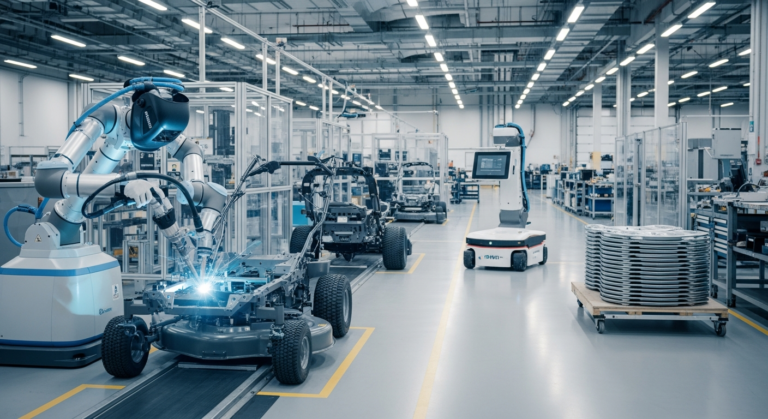
- Definition: Advanced Manufacturing changes the factory’s cost structure. It shifts production away from highly variable, manual-labor-dependent traditional processes and toward capital-intensive cyber-physical systems that use AI, robotics, and IIoT. Variable direct labor falls, while fixed overhead depreciation and software amortization rise. Automated controls should reduce the size and frequency of material usage and labor efficiency variances.
- Target Outcome: Use phased capital spending and process engineering to convert a conventional production floor into a sensor-fed Smart Factory. The target is a strict 5-day month-end financial close supported by automated data capture, along with higher inventory velocity and lower COGS.
What You Need to Prepare for Advanced Manufacturing
Securing Leadership Approval and Business-Case Fit
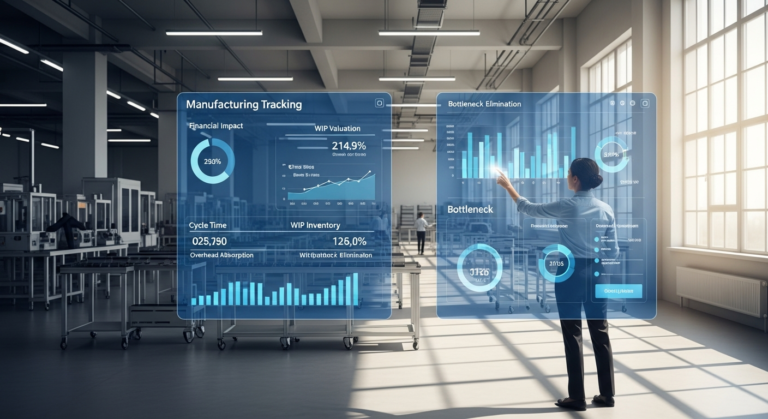
- Financial Objectives: Define the investment ROI hurdle rates. These objectives must be quantified in financial terms, such as a $X reduction in unfavorable material yield variances, an OEE increase sufficient to defer future capacity CAPEX, or shorter cycle times that lower WIP inventory working capital requirements.
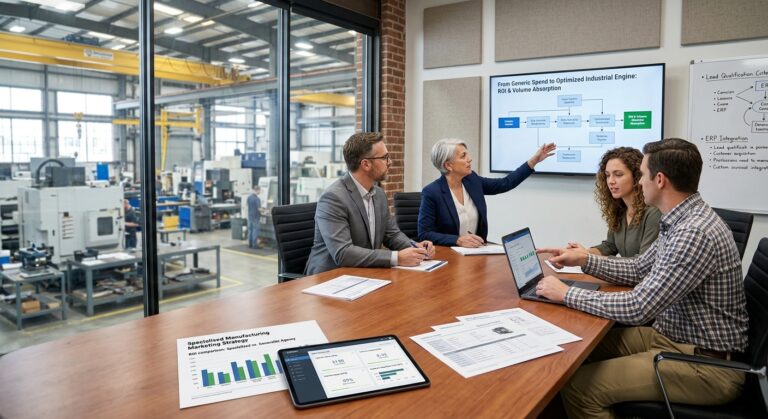
- Operational Coordination: Finance, IT, and Plant Management must agree on the impact to standard costing. If the production floor digitizes while finance leaves bill of materials (BOM) rollups and routings unchanged, standard costs will quickly disconnect from actual performance.
Establishing a Baseline Budget and Resource Allocation
- CAPEX vs. OPEX: Capitalize hardware such as sensors, cobots, and servers under standard depreciation schedules. Treat SaaS/cloud analytics platforms and AI subscriptions as OPEX.
- Implementation Allowances: Build in allowances for parallel-run direct labor and expected unfavorable overhead volume variances during installation downtime; capitalize internal IT labor where GAAP/IFRS permits.
Building a Reliable IT/OT Infrastructure
- System Evaluation: Assess how well Operational Technology (OT) on the floor, such as PLCs and SCADA, integrates with Information Technology (IT) in the back office, such as ERP and WMS.
- Connectivity Investment: Budget for high-availability infrastructure, such as localized edge servers and industrial Ethernet. Without it, latency and packet loss can render automated shop floor data collection (SFDC) unreliable for real-time labor tracking or cycle-counting controls.
Step 1: Assessing and Digitizing Traditional Processes
Conducting a Full Manufacturing Audit
- Value Stream Mapping: Trace the physical flow of raw materials through WIP to finished goods. Cross-reference that flow against the ERP’s current routing steps to identify unrecorded rework loops or off-system production steps.
- Legacy Machinery Capability: Assess the remaining useful life of existing fixed assets. Determine whether retrofitting legacy machines with analog-to-digital converters is more capital-efficient than full replacement.
Identifying Bottlenecks and Data Silos
- Throughput Accounting: Identify the facility’s constraint. Digitization efforts and CAPEX should be directed there first to maximize factory throughput.
- Manual Data Entry Reduction: Locate physical timesheets along with paper-based scrap reporting and manual QA logs. These silos delay month-end inventory reconciliation and obscure daily labor efficiency variances.
Establishing Data Collection Points and Digital Twins
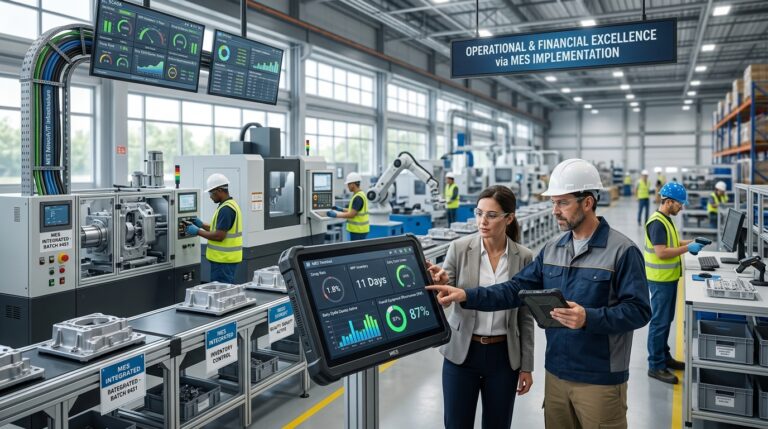
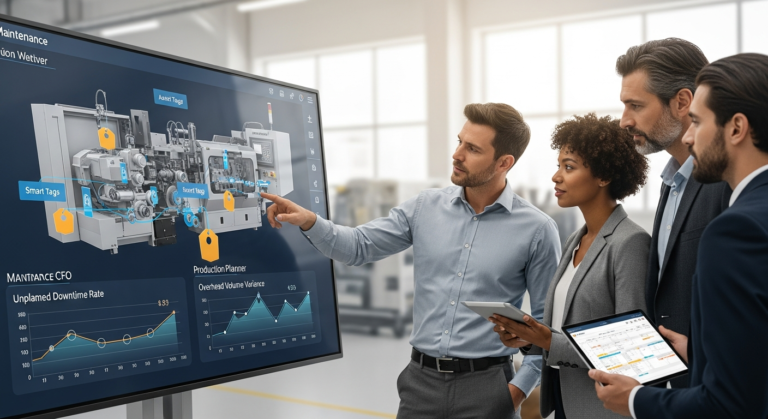
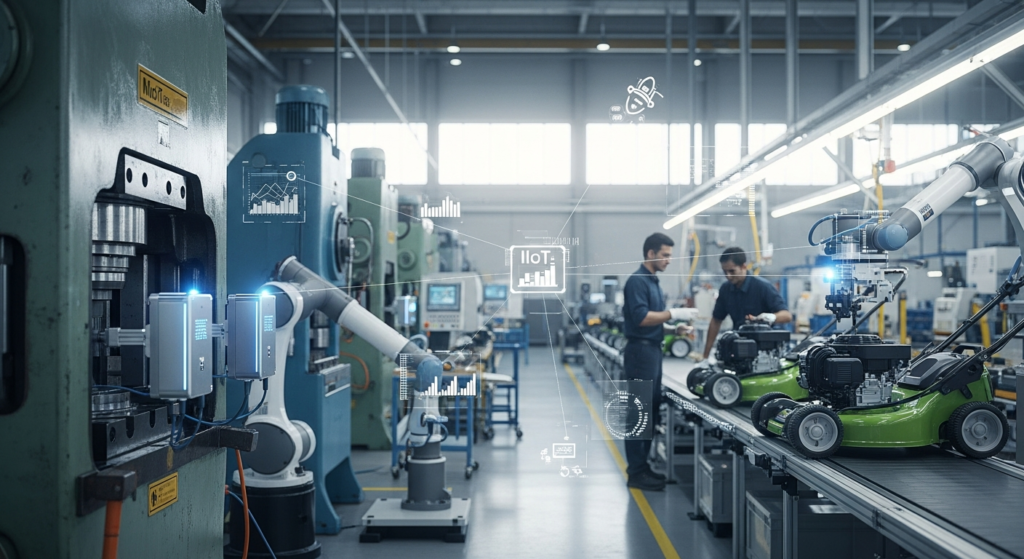
- Sensor Deployment: Install basic photoelectric or vibration sensors on legacy equipment to capture machine cycles directly into the Manufacturing Execution System (MES).
- Digital Twin Modeling: Construct a virtual model of the factory floor. From an accounting perspective, this can serve as a live standard-costing model: changes to machine speeds, labor allocations, or the process itself can be financially simulated before physical execution.
Step 2: Integrating Advanced Manufacturing Technologies
Deploying Industrial Internet of Things (IIoT) Sensors
- Network Integration: Connect inventory scales, forklifts, and machining centers to a centralized database.
- Financial Effect: This reduces reliance on periodic, disruptive wall-to-wall stocktakes. IIoT supports perpetual inventory accuracy and cycle-counting controls, giving external auditors more frequent digital evidence.