Audit Manufacturing Communication Systems for Efficiency
Start the audit of your manufacturing communication systems by identifying where message failures cause labor delays and cost variances. Fragmented communication networks between the shop floor, warehousing, and management create measurable losses: unfavorable labor efficiency variances, unabsorbed overhead from machine downtime, and degraded ERP data integrity. The audit should test the hardware (ruggedized tablets, two-way…

Start the audit of your manufacturing communication systems by identifying where message failures cause labor delays and cost variances. Fragmented communication networks between the shop floor, warehousing, and management create measurable losses: unfavorable labor efficiency variances, unabsorbed overhead from machine downtime, and degraded ERP data integrity.
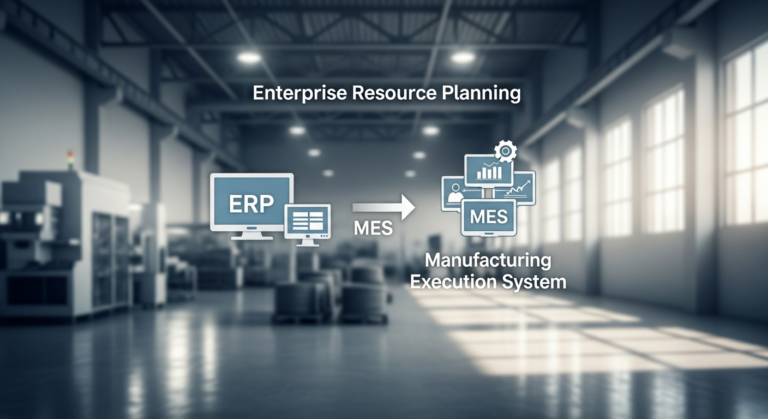
The audit should test the hardware (ruggedized tablets, two-way radios) and software (MES, ERP alert modules, SCADA feeds) against the way inventory actually moves. Data capture should occur when inventory moves; otherwise BOM rollups, cycle counting controls, and month-end close timing suffer.
What You Need to Prepare for Your Audit
Dedicated Audit Team and Cross-Department Representatives
Segregation of duties matters, but this audit also needs input from the people who use the system under production pressure. Form a steering committee comprising the Financial Controller, IT Manager, Plant Operations Manager, and end-users (e.g., CNC operators, warehouse supervisors).
- Controller’s Shortcut: Do not rely solely on department heads. Shadow a machine operator for one shift to observe undocumented workarounds.
Facility Maps and Network Architecture Documentation
Compile current schematics covering physical plant layout, Wi-Fi heat maps, cellular attenuation zones, and fixed asset placements.
- Network blind spots on the factory floor often line up with delayed ERP data entry (e.g., delayed backflushing or WIP progression), which skews daily standard costing metrics and LIFO/FIFO inventory valuations.
Baseline Performance Metrics and KPIs
Set financial and operational baselines before any changes are made; otherwise ROI and Net Present Value (NPV) claims will be speculative. Required baselines include:
- Mean Time to Repair (MTTR) and corresponding unabsorbed overhead rates.
- Labor idle time variance (costed).
- Scrap rates tied to miscommunicated BOM revisions or machine fault delays.
- Shift-handover duration (indirect labor cost).
Audit Process: Mapping and Evaluating Your Manufacturing Communication Systems
Step 1: Catalog All Existing Hardware and Software
Physically verify all communication assets and reconcile them against the fixed asset register. Categorize systems into legacy (PA systems, analog radios) and modern (MES smart devices, IoT sensor gateways).
- Audit Control: Check for fully depreciated assets that are still in use but unsupported by vendor firmware updates, creating a cybersecurity and operational risk.
2: Track Information Workflows and Identify Isolated Channels
Map how a critical event (e.g., raw material stockout or mechanical fault) moves from identification to ERP resolution.
- Mark every point where data is manually transcribed. Manual reentry delays WIP tracking, undermines cycle counting controls, and delays the recognition of unfavorable material usage variances.
3: Solicit Direct Feedback from the Shop Floor
Use targeted, variance-focused questionnaires with floor staff. Quantify the frequency of communication breakdowns and tie them to operational downtime.
- Financial Translation: If a forklift driver waits 12 minutes per shift for manual radio dispatch rather than automated MES routing, calculate the annualized labor inefficiency across all shifts.
Scenario: Aluminum Casting Plant (Discrete/Process Hybrid)
Context: A $35M turnover aluminum casting facility running a 3-shift operation (110 employees). Management noted deteriorating gross margins and increasing unfavorable labor efficiency variances.
Audit Finding: The melting floor (process) and CNC machining floor (discrete) used incompatible, legacy analog radios. Machinists experienced a 20-minute lag notifying the melting floor of alloy quality defects, resulting in continuous pouring of bad batches. Furthermore, maintenance requests required floor supervisors to walk to a terminal to log tickets in the ERP, delaying MTTR.
Financial Impact & Intervention Matrix:
| Metric | Pre-Audit Baseline | Post-Upgrade Result (12 Mo.) | Variance / Financial Impact |
|---|---|---|---|
| Scrap Rate (Alloy Defects) | 4.2% | 1.8% | $145,000 favorable material variance |
| MTTR (Machine Faults) | 115 minutes | 45 minutes | $85,000 overhead absorption gain |
| CapEx (Rugged Tablets, Wi-Fi) | $0 | $110,000 | 9.1-month Payback Period |
| Month-End WIP Reconciliation | 3 Days | 1 Day | Supports 5-day close |
Implementation Result: After ruggedized tablets were integrated with the ERP’s quality and maintenance modules, operators logged defect and maintenance codes at the work center. This triggered automated quality and maintenance workflows in the ERP.
Implementation Process: Upgrading Systems for Cross-Department Coordination
4: Standardize Protocols Across All Departments
Draft clear Standard Operating Procedures (SOPs) for communications, then enforce them consistently enough to satisfy ISO/SOX compliance frameworks.