Manufacturing Operations Management Software (MOM) Guide
Implementing Manufacturing Operations Management (MOM) Software: A Financial Controller’s Guide to Yield, Variance, and Cost Control Manufacturing Operations Management (MOM) software is the operational data link between the enterprise resource planning (ERP) system’s financial sub-ledgers and physical execution on the factory floor. For a CFO or Plant Controller, MOM extends beyond operational scheduling: it provides…
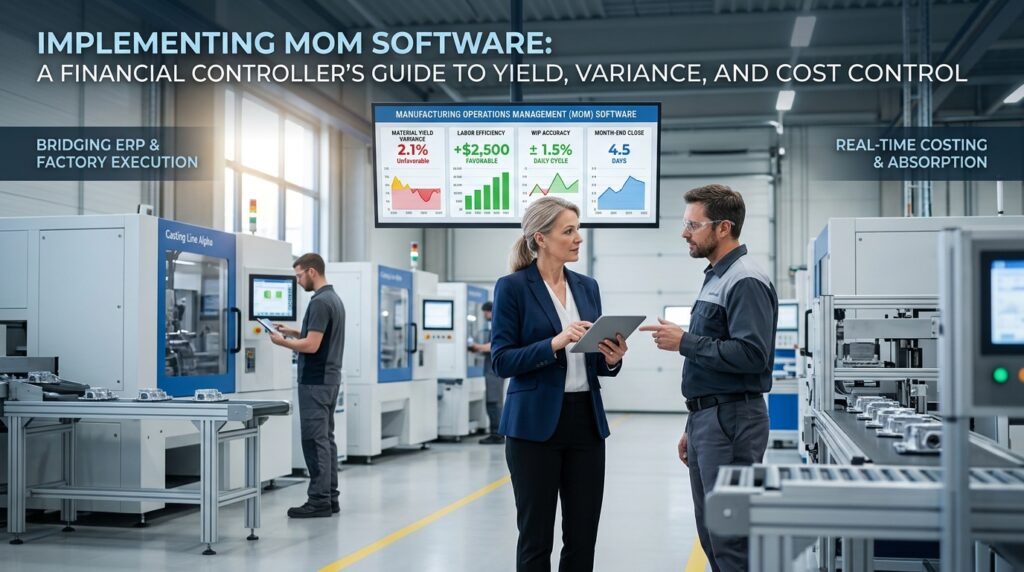
Implementing Manufacturing Operations Management (MOM) Software: A Financial Controller’s Guide to Yield, Variance, and Cost Control
Manufacturing Operations Management (MOM) software is the operational data link between the enterprise resource planning (ERP) system’s financial sub-ledgers and physical execution on the factory floor. For a CFO or Plant Controller, MOM extends beyond operational scheduling: it provides the infrastructure used to enforce accurate bill of materials (BOM) rollups, real-time absorption costing, and precise cycle counting controls. Well-implemented MOM protects the integrity of direct labor utilization metrics, material yield variances, and work-in-progress (WIP) valuation, supporting a rigorous 5-day month-end close.
The guide covers the finance and shop-floor work required to deploy MOM software, drawing on 30 years of manufacturing finance experience across discrete and process environments, including whiteware, aluminum casting, and window coverings.
Realistic Scenario: Discrete Manufacturing (Aluminum Casting)
Business Context: A $40M turnover aluminum casting and machining operation.
The Problem: The business suffered from a 12-day month-end close. WIP was calculated using generic back-flushing at standard cost, resulting in a persistent, unallocated $45,000–$60,000 negative material usage and labor efficiency variance each month. The ERP lacked visibility into machine-level scrap rates.
The Goal: Deploy MOM to enforce real-time WIP tracking, base overhead absorption on actual machine hours rather than standard estimates, and integrate cycle counting to eliminate the annual wall-to-wall stocktake.
Financial Impact Matrix (Casting Line Alpha – 90 Day Post-MOM Rollout)
| Metric | Pre-MOM (Manual/ERP Back-flush) | Post-MOM (Real-time Telemetry) | Financial Impact |
|---|---|---|---|
| Material Yield Variance | 8.4% Unfavorable | 2.1% Unfavorable | $31,500 monthly material saving |
| Labor Efficiency Variance | -$14,000 / month (Unallocated) | +$2,500 / month (Favorable) | Precise labor absorption to COGS |
| WIP Accuracy | ± 15% at month-end | ± 1.5% at daily cycle count | Eliminated $85k annual inventory write-down |
| Month-End Close | 12 Days | 4.5 Days | Reduced finance overtime by 40% |
What You Need: Preparation and Prerequisites
Documented Shop Floor Processes for Cost Centers
MOM will make inconsistent shop-floor processes visible in costing and inventory data. Before vendor selection, process flows must be mapped and aligned strictly to your cost centers. Map material issue points and valuation methods, whether FIFO or LIFO, along with the labor-application steps and scrap quarantine process. If your routing files do not reflect actual floor practices, your standard costing will fail immediately upon integration.
A Cross-Functional Project Team Ensuring Segregation of Duties
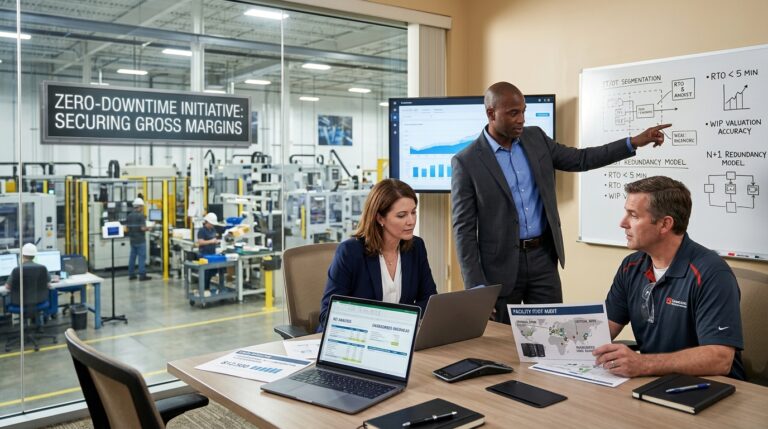
Establish a steering committee consisting of the Plant Controller for costing, the Operations Manager for throughput, the IT Manager for architecture, and the Quality Lead for compliance. From an audit perspective, the project team must establish clear user permissions within the MOM. Machine operators should not have system rights to adjust standard costs or override BOM quantities without dual-authorization controls.
Baseline IT and Hardware Infrastructure (CAPEX vs. OPEX)
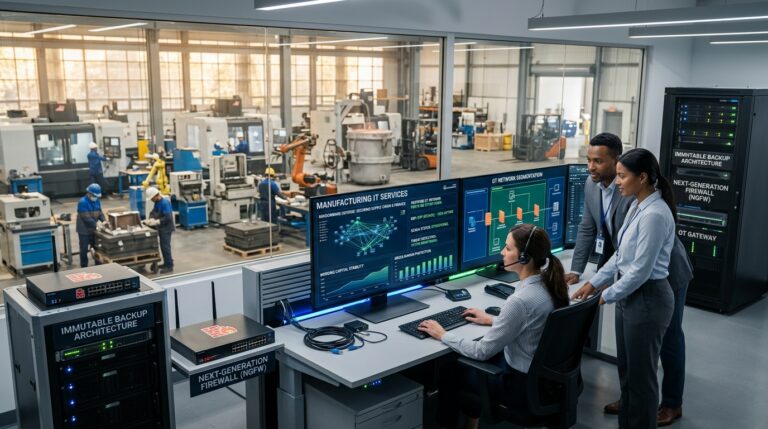
Evaluate your factory network and hardware infrastructure. You will require edge devices or PLCs to capture telemetry from legacy machinery.
- Practical Shortcut: Categorize the server and hardware upgrades as fixed asset CAPEX, depreciated over 3–5 years. If the MOM software is a SaaS deployment, recognize the implementation consulting fees as OPEX, or capitalize them under internal-use software accounting guidelines such as ASC 350-40, depending on jurisdiction, to protect short-term EBITDA.
Step 1: Selecting and Planning Your MOM Software
Defining Automation Goals Tied to Financial Metrics
Operational metrics must translate to P&L improvements. If the objective is improving Overall Equipment Effectiveness (OEE), calculate the financial corollary: reducing unabsorbed fixed overhead. Tie automation goals to specific financial KPIs, such as reducing warranty reserves through improved quality tracking or lowering working capital requirements by moving from batch-and-queue to just-in-time (JIT) production.
Evaluating Software Vendors on ERP Integration
The MOM must reliably exchange data with your ERP system. If it cannot automatically post sub-ledger journal entries for real-time material consumption, applied labor, and scrap expense, the finance team will inherit reconciliation problems. Require vendors to demonstrate a live BOM rollup and standard cost variance analysis during the sandbox phase.
Designing the Data Architecture and Authoritative Data Ownership
Determine the system of record. Typically, the ERP remains the master for financial ledgers, vendor lists, and standard costs, while the MOM owns the operational data layer: routings, machine states, and WIP inventory tracking. Establish a rigid data hierarchy to prevent synchronization errors, such as a purchased-in wholesale component being costed differently in the ERP and the MOM.
2: Executing the Deployment on the Factory Floor
Conducting a Controlled Pilot Test (Isolating Financial Impact)
Deploy the MOM software on a single production line or defined cost center, such as the machining center rather than the foundry. For the first month-end close after the pilot, run a dual reconciliation. Compare the MOM-generated WIP and variance reports against your legacy spreadsheet or basic ERP models. This limited scope prevents a configuration error, such as overhead over-absorption, from corrupting the entire factory’s P&L.
Training Your Factory Workforce on Data Integrity
Machine operators must understand that their tablet inputs generate financial transactions. Clocking into a job 20 minutes late inflates the labor rate variance; failing to scan a scrapped component understates COGS and overstates inventory assets. Training must connect physical actions on the floor to the reported financial results of the plant.
Going Live and Monitoring (The 5-Day Close Mandate)
At full deployment, institute a daily production meeting where the Plant Controller and Operations Manager review the prior day’s efficiency and usage variances generated by the MOM. Fixing a data anomaly on the second day of the month prevents a multi-day forensic accounting investigation during close.
Common Mistakes to Avoid
Over-Customizing the Software Out of the Box
The Mistake: Modifying the MOM’s core code to accommodate legacy, inefficient manufacturing processes.
The Financial Impact: Customization drives large cost overruns during implementation and guarantees high future OPEX for maintenance and version upgrades.
The Fix: Standardize physical processes to match the software’s out-of-the-box workflows. This helped consolidate a $60M business from two sites to one. Both sites were forced onto standard MOM logic, saving more than $1.4M p.a. in redundant administrative and software maintenance costs.
Neglecting Change Management (Input Data Quality Risk)
The Mistake: Treating MOM as an IT project rather than a change in daily shop-floor routines and controls, leading to operators “batch entering” their shift data in the last 15 minutes of the day.
The Financial Impact: Real-time absorption costing fails. The finance team is left with large, unexplained timing variances between material issuance and labor application.
The Fix: Institute automated time-stamping via machine PLCs wherever possible. Where manual entry is required, implement supervisory sign-offs on shift variances above 5%.
Migrating Dirty Data
The Mistake: Importing outdated BOMs, incorrect standard costs, or ghost inventory into the new database.
The Financial Impact: This corrupts product margins immediately. If an obsolete BOM is imported, the MOM will keep back-flushing the wrong components, creating false negative inventory balances and forcing manual journal entries to correct COGS.
Practical Shortcut: Execute a rigid “BOM Scrub” prior to migration. Use an 80/20 rule: physically audit the routings and standard costs for the top 20% of SKUs that drive 80% of your revenue and volume. Quarantine the rest until they are ordered.
Frequently Asked Questions
What is the difference between MES and MOM software from a financial perspective?
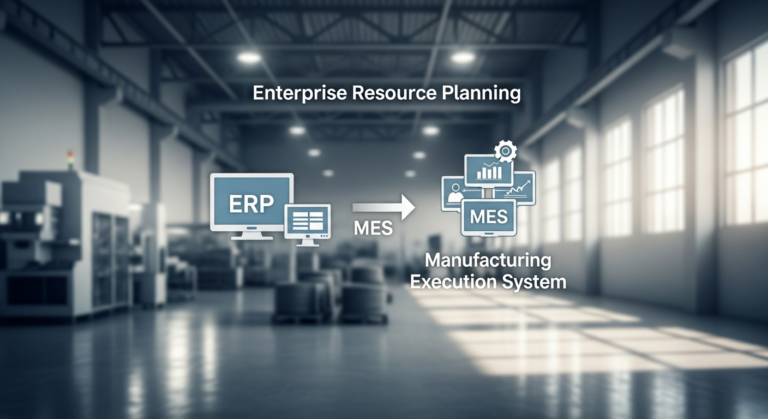
An MES, or Manufacturing Execution System, is highly transactional. It executes production orders and tracks WIP. MOM includes MES functions and adds quality management, advanced scheduling, and maintenance. For finance, that means more complete inputs for warranty provision calculations, working capital and inventory turns, and capital-versus-expense tracking on plant machinery.
How long does it typically take to deploy this software?
A standard deployment takes 3 to 9 months. Financially, that spans multiple quarters. Ensure that milestone payments to the software vendor are tied strictly to user-acceptance testing (UAT) sign-offs, especially the successful integration of inventory valuation reports with the ERP.
Will this software work with older, legacy factory machines?
Yes. Legacy machines, such as older aluminum die-cast machines or traditional fabric knitting looms, can be retrofitted with edge controllers. These devices capture simple telemetry, including cycle completion, power draw, and fault states, and push it to the MOM. This avoids the requirement for multi-million-dollar CAPEX equipment replacements while still capturing usable production data.
Target State: Automated Cost Control
Achieving Real-Time Financial Visibility
With MOM deployed, finance can see current production and cost data by line, job, and cost center. Plant controllers can monitor live yield rates and labor efficiencies, ensuring that margins on custom job-shop orders are protected during production rather than reviewed after month-end.
Continuous Data-Driven Cost Control
The MOM history establishes a baseline for process-improvement work and capital planning. Accurate machine utilization data supports predictive maintenance decisions, asset useful-life assumptions, and the auditor-approved ROI needed to finance future factory automation and capacity expansions.