How to Implement Manufacturing Robots [Guide]
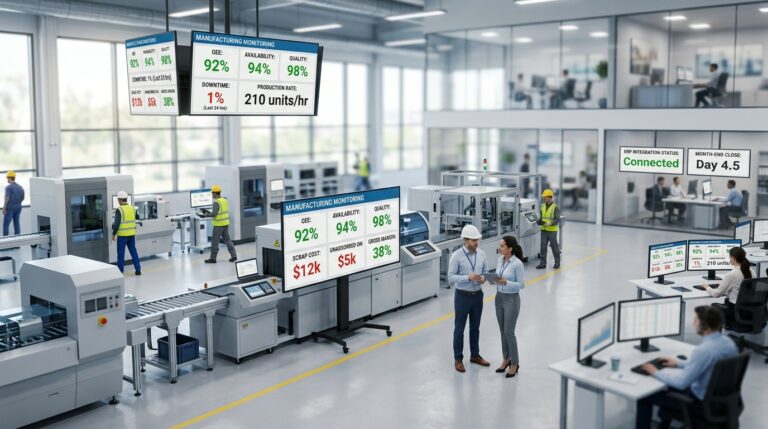
Capital allocation toward factory automation robotics changes a manufacturer’s cost structure, shifting variable direct labor costs to fixed overhead while tightening cycle time predictability. For a financial controller, integrating manufacturing robots affects standard costing models, bill of materials (BOM) rollups, and overhead absorption rates in addition to operations. Implementation requires financial and operational execution while…
Capital allocation toward factory automation robotics changes a manufacturer’s cost structure, shifting variable direct labor costs to fixed overhead while tightening cycle time predictability. For a financial controller, integrating manufacturing robots affects standard costing models, bill of materials (BOM) rollups, and overhead absorption rates in addition to operations. Implementation requires financial and operational execution while maintaining internal controls, capitalization discipline, and ROI validation.
What You Need Before You Begin
Clear Automation Goals
Avoid vague operational mandates. Establish strict financial and operational Key Performance Indicators (KPIs). Define expected improvements in standard direct labor hours per unit, targeted reductions in material yield variances (scrap rates), and exact Return on Investment (ROI) and Internal Rate of Return (IRR) thresholds. Base these targets on historical data from your Manufacturing Execution System (MES).
Budget and Resource Allocation
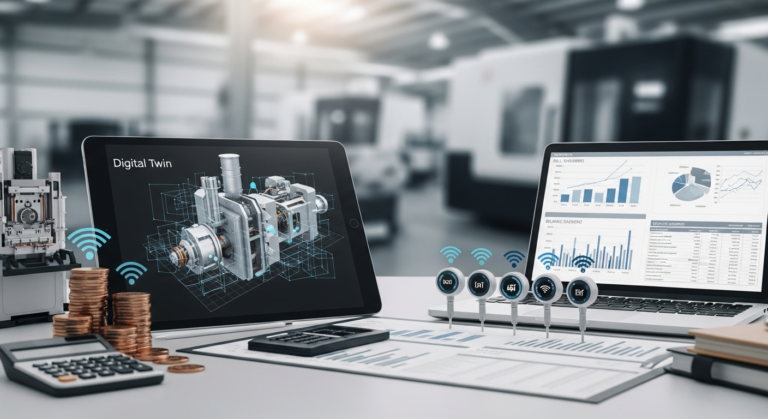
Use a Total Cost of Ownership (TCO) model rather than relying on the initial hardware quote. CAPEX modeling must capture:
- Bare robot hardware and end-of-arm tooling (EOAT).
- Facility infrastructure modifications, including power drops, pneumatic lines, and reinforced flooring.
- Systems integration and API bridging to your ERP.
- Freight, taxes, and initial safety compliance audits.
- Accounting Shortcut: Establish a dedicated Construction in Progress (CIP) account code immediately upon project approval. Route all related invoices to this code: hardware, contractor labor, and capitalized internal engineering time under ASC 360/IAS 16. This prevents month-end reclassification scrambles and supports a clean 5-day close.
A Dedicated Implementation Team
Assemble a steering committee governed by strict Capex approval workflows. The core team should include the Plant Manager, Production Engineer, IT/Systems Lead, and Financial Controller. Cross-functional oversight keeps the operational design aligned with system architecture, especially where automated inventory consumption, such as automated backflushing, triggers journal entries.
Infrastructure and Space Readiness
Conduct a physical plant workflow audit. Expanding pneumatic capacity or upgrading three-phase power directly impacts your depreciation schedules. Separate routine repair expenditures, which are expensed immediately, from structural upgrades that are capitalized and depreciated over the facility’s remaining useful life.
Step 1: Assessing Your Facility and Selecting the Right Manufacturing Robots
Identifying the Right Processes for Automation
Audit routing steps within your ERP to identify high-variance cost centers. Target workflows with persistent unfavorable labor efficiency variances or high standard overhead absorption rates caused by manual bottlenecks.
- Process Fit: Automate tasks with highly consistent inputs. Variable inputs require complex machine vision, which can increase CIP costs sharply.
Choosing the Robot Type
Asset controls and useful-life assumptions vary by robot type.
- Articulated/Delta Robots: High CAPEX, typically fixed to a single work cell.
- Collaborative Robots (Cobots): Lower integration cost, highly mobile. For fixed asset audits, cobots must be tightly controlled through asset tagging, since their mobility increases the risk of unrecorded transfers between cost centers.
Evaluating Payload and Reach Requirements
Payload limits determine the required torque and motor sizing, which affects ongoing utility consumption. Over-engineering payload capacity creates unnecessary upfront capital outlays and inflates the factory overhead allocation rate, penalizing product margins during BOM rollups.
2: Designing and Integrating the Robotic System
Partnering with a Systems Integrator
Treat the integrator contract as a critical financial control point. Negotiate milestone-based payment terms, such as 30% upfront, 40% at FAT, and 30% after 30 days of live production, rather than standard Net 30 terms. This protects cash flow and reduces exposure to integration delays.
Developing the Cell Layout and Safety Protocols
Safety enclosures, including fencing and light curtains, should be componentized in your fixed asset register if they possess a different useful life than the robotic arm itself. Updated risk assessments must also be submitted to your commercial insurance broker. Automated cells often reduce workers’ compensation premiums, creating cash savings that should be included in the ROI model.
Programming and Software Integration
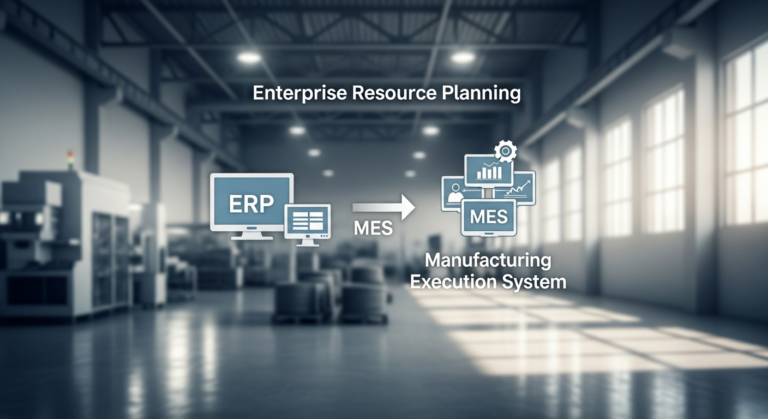
The robotic controller must handshake with your ERP/MES. Establish exact trigger points for backflushing components. If the robot pulls from floor stock, tighten cycle counting controls in that specific bin location to prevent phantom inventory build-ups. Automated production without real-time API integration leads to delayed month-end variance reporting.
Conducting Factory Acceptance Testing (FAT)
Do not move CIP to the fixed asset register or begin depreciation until FAT is signed off and the system is in the location and condition necessary for its intended use. Premature depreciation can trigger audit adjustments and artificially depress current-period operating income.
Realistic Scenario: Discrete Manufacturer Integration (Aluminum Casting & Machining)
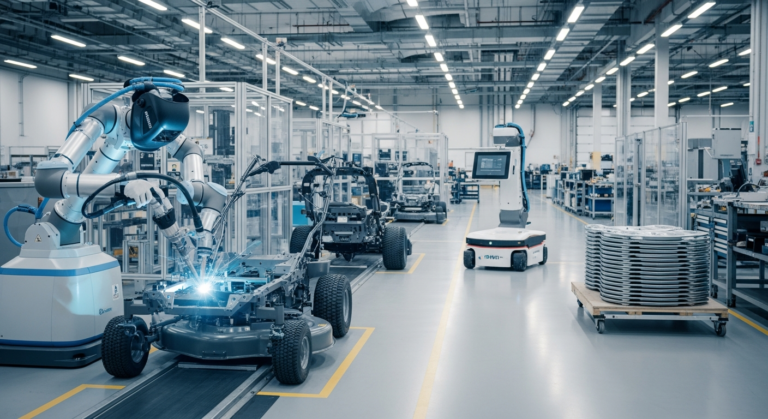
Context: A $35M turnover aluminum casting plant manufacturing lawnmower decks. Management consolidated two sites into one, saving $1.4M p.a., but created a bottleneck at the deburring/grinding station.
Action: Implemented two articulated grinding robots.
Financial Matrix (TCO & ROI Analysis):
| CAPEX / OPEX Component | Cost / Benefit ($ USD) | Accounting Treatment |
|---|---|---|
| Robotic Hardware & EOAT | $280,000 | Capitalized (7-year MACRS) |
| Integrator Fees & Software | $120,000 | Capitalized to CIP |
| Facility Prep & Safety | $50,000 | Capitalized (15-year leasehold) |
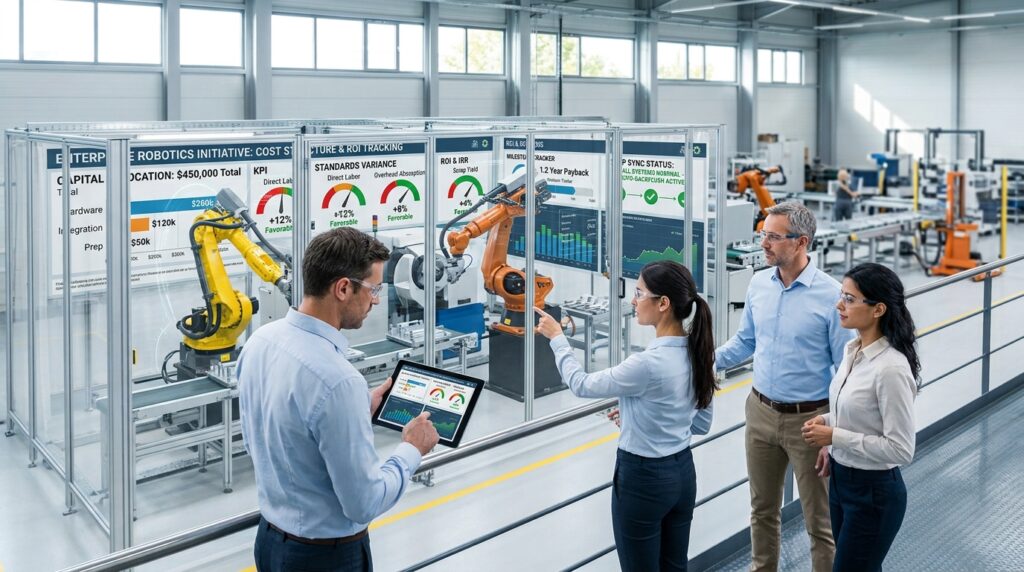
| Total CAPEX | $450,000 | Baseline for Depreciation |
| Labor Savings (4 FTEs reallocated) | $220,000 / year | Direct Labor rate reduction |
| Scrap Reduction (Yield Variance) | $180,000 / year | Favorable material usage variance |
| Preventative Maintenance (PM) | ($25,000) / year | OPEX (Factory Overhead) |
| Net Annual Cash Flow (Pre-tax) | $375,000 | Payback: 1.2 Years |
Result: Standard costing for the lawnmower deck BOM was revised down by $4.15 per unit, improving gross margin reporting and allowing sales teams to negotiate more competitive volume contracts.
Common Mistakes to Avoid During Integration
Automating a Bad Process
Automating an inefficient workflow is a costly financial error. It generates scrap at a higher velocity and accelerates negative material usage variances. Lean out the physical routing before introducing robotics.
Underestimating the Need for Employee Training
If standard labor hours are not converted to training hours during the transition, operators will idle while the machine faults. The result is unabsorbed overhead and unfavorable labor efficiency variances during the implementation quarter.
Neglecting Safety Standards and Risk Assessments
Financially, bypassing safety controls introduces contingent liabilities, including lawsuits and OSHA fines, that may require disclosure in financial statements. Safety logic must be hardwired and auditable.
Overlooking Post-Installation Maintenance
Failure to accrue for ongoing maintenance artificially inflates first-year ROI. Skipping preventative maintenance also causes unplanned downtime, damaging factory overhead absorption rates and volume variances because fixed costs remain static while production volume falls.
Post-Deployment Controls and Expansion Planning for Robotic Operations
Analyzing Post-Deployment Performance Metrics
Following deployment, standard costs must be re-evaluated. Run a variance analysis comparing actual cycle times to the newly modeled standard times. If the robot consistently beats the standard, execute a BOM rollup for the new fiscal year so inventory valuation reflects the lower cost of production.
Establishing a Preventative Maintenance Schedule
Embed robotic PM schedules directly into your ERP’s maintenance module. Track MRO (Maintenance, Repair, and Operations) inventory closely using a FIFO valuation method. Spare parts, including servos and end-effectors, should be accurately valued and expensed in the correct period when consumed.
Identifying Future Areas for Automation Expansion
Use the documented results from the capital deployment to justify future automated cells. With validated ROI data, CFOs can approve additional CAPEX with greater confidence. Debt facilities or equipment financing may also become easier to support when the business has documented implementation results.
Frequently Asked Questions About Manufacturing Robots
How much do manufacturing robots typically cost?
From a capital expenditure perspective, bare robotic arms run from approximately $25,000 for light cobots to $150,000+ for heavy-payload articulated robots. Actual CIP costs are materially higher. Integration, tooling, safety, and MES connections typically multiply the hardware cost by 2.5x to 4x.
Will manufacturing robots replace my human workforce?
Robotics usually change the labor mix rather than simply eliminating roles. Direct labor as a variable COGS item declines, while indirect labor for maintenance technicians and programmers rises. The net financial impact is usually lower variable cost and more predictable unit cost at higher volume, though overall headcount often stabilizes as throughput and factory turnover scale up.
How long does it take to see an ROI on factory robotics?
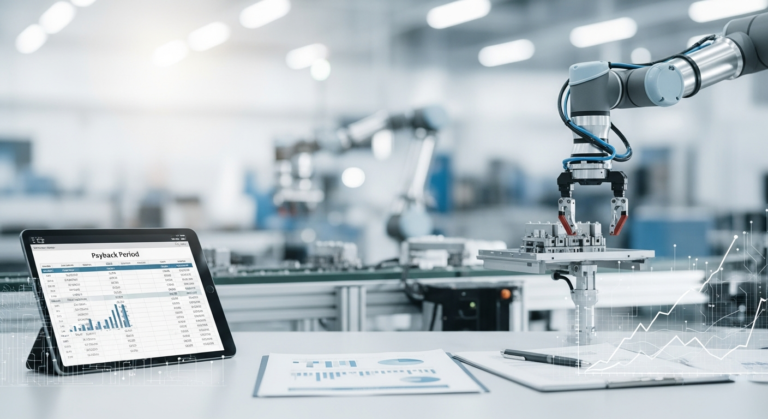
A well-executed robotic integration in a discrete manufacturing environment should clear a payback period of 12 to 24 months. If the projected IRR does not exceed your company’s Weighted Average Cost of Capital (WACC) plus a risk premium, typically a hurdle rate of 15-20%, the project should be rejected.
What is the average lifespan of an industrial robot?
For depreciation purposes, industrial robots are generally assigned a useful life of 7 to 10 years, with MACRS 7-year property class treatment in the US. Mechanically, with strict adherence to OPEX-funded preventative maintenance, a robot can operate for 12 to 15 years. The final years of operation can therefore yield accretive margin after depreciation has ended.
Do I need to hire a dedicated robotics engineer to run these systems?
Not necessarily, but you must adjust your OPEX budget. There are two options: budget for ongoing Service Level Agreements (SLAs) with your systems integrator, recorded as outsourced services overhead, or invest in upskilling existing maintenance staff. For factories under $50m turnover, upskilling an internal PLC/maintenance technician is usually preferable to adding a $120k+ fixed engineering salary to SG&A.