AI in Manufacturing Robotics: Step-by-Step Guide
The Executive Finance Guide to Implementing AI in Manufacturing Robotics Defining AI in Manufacturing from a Financial PerspectiveAI in manufacturing changes the accounting and cost profile of automation. Instead of buying robots that follow fixed rules, manufacturers buy automation assets that adjust operating parameters using production data. For the financial controller or CFO, integrating machine…
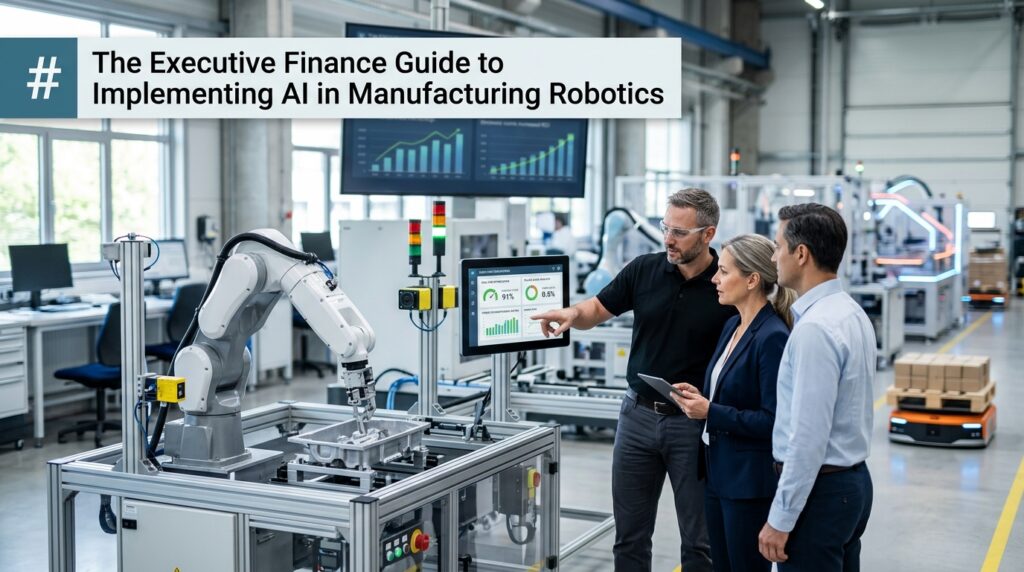
The Executive Finance Guide to Implementing AI in Manufacturing Robotics
Defining AI in Manufacturing from a Financial Perspective
AI in manufacturing changes the accounting and cost profile of automation. Instead of buying robots that follow fixed rules, manufacturers buy automation assets that adjust operating parameters using production data. For the financial controller or CFO, integrating machine learning and computer vision with factory robotics changes standard costing methods, can reduce unfavorable labor efficiency variances, and can shorten production and inventory holding times. Traditional automation relies on fixed routing times in the ERP; AI-driven robotics use operating data to adjust those assumptions. They adapt in real time, which can require frequent updates to Bill of Materials (BOM) rollups and overhead absorption rates.
Financial and Operational Prerequisites
A Baseline Automation Infrastructure
Before committing capital to AI, assess the Net Book Value (NBV) and remaining useful life of your existing robotic fleet.
- Asset Register Audit: Ensure existing articulated arms or autonomous mobile robots (AMRs) are fully reconciled in the fixed asset register.
- Interoperability: Hardware must be capable of receiving API commands. Legacy assets requiring extensive PLC retrofitting may trigger impairment testing if the upgrade costs exceed recoverable amounts.
Data Collection Sensors (IoT) and Cost Categorization
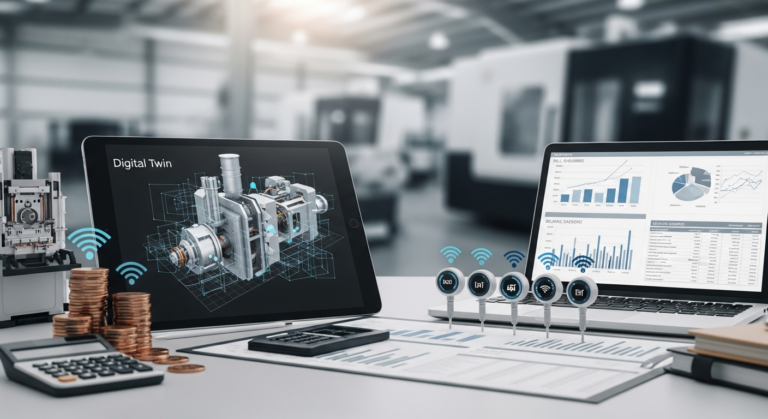
AI models require continuous telemetry. This usually means deploying IIoT sensors, smart cameras, and torque monitors.
- Capitalization Thresholds: Determine if sensor clusters meet your capitalization threshold, e.g., >$5,000 per unit, or if they must be expensed immediately as repairs and maintenance.
- Inventory Valuation Impact: Improved sensor data integrates directly with cycle counting controls, helping facilities move from periodic physical stocktakes to perpetual FIFO inventory validation and reducing inventory shrinkage write-offs.
Cloud or Edge Computing Architecture (CapEx vs. OpEx)
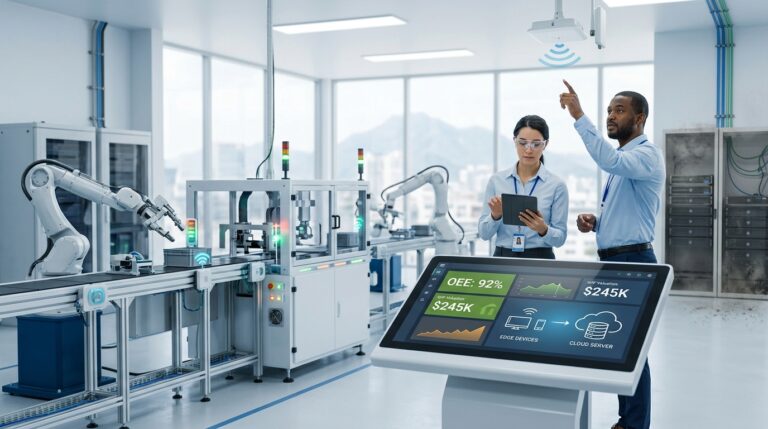
The choice of computing architecture affects latency and accounting treatment.
- Edge Computing (CapEx): Localized servers capitalized as IT hardware, depreciated over 3–5 years.
- Cloud Subscriptions (OpEx): IaaS/SaaS models treated as period expenses. Ensure internal-use software development costs related to configuring these cloud models are appropriately capitalized under ASC 350-40, or local equivalent, during the application development stage.
Cross-Functional Implementation Team & R&D Tax Credits
The integration usually requires a robotics engineer, a data scientist, and an operations manager.
- Payroll Allocation: Track project hours in detail.
- Tax Strategy: Time spent developing bespoke AI algorithms for proprietary manufacturing processes frequently qualifies for R&D tax credits. Documenting this phase rigorously supported a $750K tax credit in a prior fiscal year.
Implementation Sequence for AI in Manufacturing Robotics
Step 1: Identify and Isolate the Target Process (Constraint Analysis)
Do not overhaul the plant floor simultaneously. Apply throughput accounting principles to identify the system’s primary constraint. Select a bottleneck, such as visual quality inspection in aluminum casting, where reducing scrap directly increases throughput contribution margin.
- Financial Gate: Require a formal NPV calculation and payback period analysis before greenlighting the specific use case.
2: Establish the Data Pipeline and Internal Controls
Connect IoT sensors to the computing architecture.
- Audit Trail: Ensure the data pipeline maintains strict segregation of duties between operational technology (OT) data generation and the financial ERP integration.